Showing posts with label Chicago White Sox. Show all posts

Friday, December 31, 2021

In Memoriam, 2021

Prominent Chicago sports figures who passed away in 2021 include Tony Esposito, the Blackhawks Hall of Fame goalie from 1969 through 1984; Jerry Harkness, captain of the Loyola Ramblers’ 1963 NCAA champion basketball team; LaMarr Hoyt, who won the American League Cy Young Award for the 1983 White Sox; and Roland Hemond, the beloved baseball executive who (along with Bill Veeck Jr.) saved the Sox for Chicago when it seemed inevitable that they would be gone.
     
TONY ESPOSITO

The people listed below each played a part in making Chicago the greatest sports town in the world. They will be missed.  

STAN ALBECK

Stan Albeck, 89, Bulls head coach 1985-1986; Bradley University men’s basketball head coach 1986-1991 (March 25).

Joe Altobelli, 88, Cubs manager 1991 (March 3).


LOU ANGOTTI

Lou Angotti, 83, Blackhawks center/right wing 1965-1967, 1969-1973; Chicago Cougars (WHA) center 1974-1975 (September 16).

LIONEL ANTOINE

Lionel Antoine
, 71, Bears tackle 1972-1978, selected third overall in 1972 NFL draft (December 14).

Jon Arnett, 85, Bears halfback/end 1964-1966 (January 16).

Art Anderson, 84, Bears offensive tackle 1961-1962 (February 25).


RALPH BACKSTROM

Ralph Backstrom
, 83, Blackhawks center 1972-1973; Chicago Cougars (WHA) center 1973-1975, co-owner 1974-1975 (February 7).

Hal Breeden, 76, Cubs first baseman 1971 (May 3).

Hy Cohen, 90, Cubs pitcher 1955 (February 4).
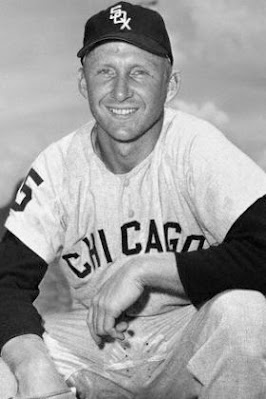

JOE CUNNINGHAM

Joe Cunningham
, 89, White Sox first baseman/outfielder 1962-1964 (March 25).

Ralph Davis, 82, Chicago Packers (NBA) guard 1961-1962 (May 30).

Jeff Dickerson, 43, Bears reporter for ESPN Radio 2001-2021 and ESPN.com 2009-2021 (December 28).

Solly Drake, 90, Cubs outfielder 1956 (August 18).


TONY ESPOSITO

Tony Esposito, 78, Blackhawks goalie 1969-1984, five-time All-Star, three-time Vezina Trophy winner as outstanding goalie in NHL, Calder Trophy winner as NHL rookie of the year 1970, elected to Hockey Hall of Fame in 1988, sweater number 35 retired by Blackhawks in 1988, named among 100 greatest hockey players of all time in 2017, ranked by hockey-reference.com as the greatest player in Blackhawks history (August 10).

Adrian Garrett, 78, Cubs catcher/first baseman/outfielder 1970, 1973-1975 (April 22).

Howie Glover, 86, Blackhawks right wing 1958-1959 (June 15).

Johnny Groth, 95, White Sox outfielder 1954-1955 (August 7).

Shaler Halimon, 76, Bulls guard 1969-1971 (April 19).

Joe Hardy, 75, Chicago Cougars (WHA) center 1973-1975 (February 19).


JERRY HARKNESS

Jerry Harkness
, 81, Loyola University men’s basketball point guard, 1960-1963, captain of 1963 NCAA championship team, first-team All-American 1963, uniform number 15 retired in 1991, inducted into the College Basketball Hall of Fame with his Loyola teammates in 2013 (August 24).

Chuck Hartenstein, 79, Cubs pitcher 1966-1968 (October 2).

Geno Hayes, 33, Bears linebacker 2012 (April 26).

Jimmy Hayes, 31, Blackhawks right wing 2011-2013 (August 23).


ROLAND HEMOND

Roland Hemond
, 92, White Sox general manager 1970-1985, senior vice president 2001-2007, The Sporting News Major League Executive of the Year 1972; founded Arizona Fall League 1992; recipient of Buck O’Neil Lifetime Achievement Award from National Baseball Hall of Fame 2011 (December 12).


LaMARR HOYT

LaMarr Hoyt
, 66, White Sox pitcher 1979-1984, American League Cy Young Award 1983, led American League in wins 1982 and 1983 (November 29).

Doug Jones, 64, Cubs pitcher 1996 (November 22).

Don Kojis, 82, Bulls forward 1966-67, started first game in franchise history on October 15, 1966 (November 19).


ROGER LeCLERC

Roger LeClerc
, 84, Bears placekicker and linebacker 1960-1966, member of 1963 world championship team (January 21).

Cyril Pinder, 74, Bears running back 1971-1972 (January 23).


JUAN PIZARRO

Juan Pizarro
, 84, White Sox pitcher 1961-1966, All-Star 1963-1964; Cubs pitcher 1970-1973 (February 18).

Ken Reitz, 69, Cubs third baseman 1981 (March 31).

John Roach, 87, Chicago Cardinals quarterback/defensive back 1956, 1959 (February 18).


EDDIE ROBINSON

Eddie Robinson
, 100, White Sox first baseman 1950-1952, All-Star 1951-1952 (October 4).

Bobby Schmautz, Blackhawks right wing 1967-1969 (March 28).

Tom Simpson, 93, Cubs pitcher 1953 (February 7).

Fred Stanfield, 77, Blackhawks center/wing 1964-1967 (September 13).

Wayne Terwilliger, 95, Cubs second baseman 1949-1951 (February 3).


DICK TIDROW

Dick Tidrow
, 74, Cubs pitcher 1979-1982; White Sox pitcher 1983 (July 10).

Vito Valentinetti, 92, White Sox pitcher 1954; Cubs pitcher 1956-1957 (August 5).

Granville Waiters, 60, Bulls center 1986-1988 (March 23).


Check out our book Heydays: Great Stories in Chicago Sports on Amazon. 


Thursday, December 9, 2021

Mr. White Sox Joins the Hall of Fame

Orestes “Minnie” Minoso, a.k.a. “Mr. White Sox,” has finally been elected to the National Baseball Hall of Fame. Needless to say, the honor was long overdue. 
     Born in Havana, Cuba, Minoso was the first significant Latin American star in major league history. He finished second in voting for the American League Rookie of the Year in 1951. He finished fourth in voting for Most Valuable Player in 1951, 1953, 1954, and 1960. He won three Gold Gloves and was a nine-time All-Star.

     
MINNIE MINOSO

When Minoso made his debut with the Sox on May 1, 1951, he became the first Black player to appear in a major-league game for either Chicago team (almost three full seasons before Ernie Banks and Gene Baker joined the Cubs).
In his first seven seasons, Minoso hit over .300 five times, knocked in 100 or more runs three times, and led the league in stolen bases three times. His aggressive style ignited the Go-Go White Sox, and he became the most popular player on the South Side. But then he was traded to Cleveland, and he missed the pennant year of 1959.
Minoso returned to the White Sox in 1960. A record opening-day crowd of 41,661 at Comiskey Park gave him a hero’s welcome, and he gave them their money’s worth. He went 2-f0r-4 and drove in six runs on a grand slam, a sacrifice fly, and a walk-off home run leading off the bottom of the ninth. He also threw out two Kansas City baserunners at home plate. The Sox prevailed 10-9.
“I’m comfortable here,” he said after the game. “I was here before and I feel like this is my home.” 

When it was all said and done, Minoso had played on the South Side from 1951 through 1958, 1960 through 1961, and in 1964 (he also played briefly in 1976 and 1980, thanks to owner Bill Veeck’s fondness for publicity stunts). 
Minnies number 9 was retired in 1983, a statue of him was erected in 2004, and he remained a constant presence at White Sox home games through 2014. He passed away during spring training in 2015.
 
  
Check out our book Heydays: Great Stories in Chicago Sports on Amazon.  


Saturday, December 4, 2021

LaMarr Hoyt, 1955 - 2021

LaMarr Hoyt, who passed away this week, joined Richard Dotson, Floyd Bannister, and Britt Burns in the quartet of young starting pitchers that carried the 1983 White Sox to the franchise's first postseason appearance since 1959. 
     
LaMARR HOYT

The burly, bearded righthander was listed at 6-foot-2 and 220 pounds--but he admitted to weighing "a ways above" 240. After leading the American League with 19 victories in 1982, Hoyt lost six of his first eight decisions as the Sox struggled through the early going in 1983. He then went 22-4 for the rest of the season, and the South Siders romped to the division title by 19 games.
     Hoyt ended up 24-10 for the year, with a 3.66 earned run average, 11 complete games, and only 31 walks in 260 innings. He received the Cy Young Award after the season.
     In what turned out to be the only postseason game of his career, Hoyt scattered five hits, walked none, and went the distance as the Sox beat Baltimore 2-1 in the opener of the 1983 American League Championship Series. Alas, the Orioles captured the next three games to clinch the series. Hoyt would have been on the mound for a decisive Game 5 that never took place. "No way did I want to see Hoyt tomorrow," said Orioles outfielder Ken Singleton after Game 4.

     Hoyt was involved in two trades for noteworthy White Sox shortstops. As a minor leaguer in April 1977, he was traded by the New York Yankees to the Sox with outfielder Oscar Gamble for Bucky Dent. In December 1984, he was dealt to the San Diego Padres for four players, including Ozzie Guillen.
     Despite his prodigious size, Hoyt could barely throw hard enough to break a pane of glass. Therefore, he needed to get by on guts and guile--both of which he had in abundance. "What I learned to do," he said, "was to make the absolute most of the limited talent I had. I couldn't ever blow hitters away, but I could put a ball where I wanted, and I could make the ball move. I knew how to attack the corners of the plate."
     Injuries and personal issues derailed his career soon after the glory year of 1983, but Hoyt is still remembered fondly by fans and teammates. "He had average stuff," White Sox manager Tony LaRussa said, "but amazing command and tremendous confidence. He never showed fear. What a great competitor."


Check out our book Heydays: Great Stories in Chicago Sports on Amazon.  


Friday, August 20, 2021

'Twas Thirty Years Ago: Chicago Sports Memories of 1991

 After losing the Eastern Conference finals to the Detroit Pistons in both 1989 and 1990, the Bulls vowed that it would not happen again in 1991. They won 20 of 21 games during a late-season surge that saw them overtake Detroit for the division title. Michael Jordan, in his seventh season, earned his second Most Valuable Player award, while fourth-year men Scottie Pippen and Horace Grant emerged as key contributors.
     
MICHAEL JORDAN

In the postseason, the Bulls made quick work of the New York Knicks (three games to none) and Philadelphia 76ers (four games to one) to set up the opportunity that they had waited for all year—a rematch with Detroit in the conference finals.
     The Bulls not only won the series; they swept it in four straight games. They trailed for just 13 of the 192 minutes played. Detroit coach Chuck Daly frankly admitted that his team had no answer for the Bulls' quickness, athleticism, and desire. As the clock ticked down in the final game, Detroit's Isiah Thomas, Bill Laimbeer, Mark Aguirre, and Dennis Rodman embarrassed themselves more thoroughly than the Bulls' dominance had. They left the bench and slinked into the locker room before the game was over. 
     The Bulls then dispatched Magic Johnson and the Los Angeles Lakers with surprising ease in the NBA Finals to capture their first world championship. Jordan cradled the trophy in his arms and wept for joy, but also for relief that he was no longer a superstar whose team had never won a title. He didn't know yet that this first ascent to the pinnacle was not the culmination of his career, but just the beginning of a new phase.
(Likewise for Phil Jackson, who had won two titles as a player and now had his first as a head coach. He would add ten more before he was through, setting a record that will last a long time.) 
     "They still haven't proved anything," Rodman had said after the Bulls eliminated the Pistons. "They've got to win about five or six [championships] before they're a great team." The Bulls obliged by capturing half a dozen world championships before the decade was out. Who could have guessed that Rodman himself would be aboard for the second three-peat from 1996 through 1998?

     
ED BELFOUR

The Blackhawks sailed through the 1990-91 season with a record of 49-23-8, racking up 106 points and capturing the President's Trophy as NHL regular-season champions. Ed Belfour won the Calder Trophy as rookie of the year and the Vezina Trophy as the league's outstanding goalie. Laconic veteran right wing Steve Larmer and brash young center Jeremy Roenick were the club's top offensive threats, while Chicago native Chris Chelios, newly acquired from Montreal in a trade for star center Denis Savard, anchored the backline. The Hawks went into the postseason with justifiably high hopes—but they failed to advance beyond the first round. They lost the first series to the Minnesota North Stars, four games to two.

     
NEAL ANDERSON

In Mike Ditka's 10th year as their head coach, the Bears went 11-5 and qualified for the NFL playoffs as a wild-card entry. The streaky Bears won their first four games, lost two, won five, lost two, won two, and lost one. They were routed 52-14 by San Francisco in the season finale. The 49ers (who finished at 10-6) had already been eliminated from the postseason, and they took out their frustration on the Bears before a national audience on Monday Night Football.
     The Bears lost to Dallas, 17-13, at Soldier Field in the divisional playoff round. It turned out to be their last playoff game under Ditka, whose postseason record ended up at 6-6. 
      The Bears sent five players to the Pro Bowl: running back Neal Anderson, center Jay Hilgenberg, linebacker Mike Singletary, strong safety Shaun Gayle, and free safety Mark Carrier.

     
FRANK THOMAS

The White Sox moved into the new Comiskey Park (now known as Guaranteed Rate Field), directly across 35th Street from the site of their previous home. They drew over 2.9 million to the new park, shattering the franchise attendance record by 800,000. Coming off an excellent showing in 1990, the Sox slipped a bit in the standings, going 87-75 to finish eight games behind the world-champion Minnesota Twins. On the plus side, a pair of 23-year-olds, first baseman Frank Thomas and third baseman Robin Ventura, established themselves as rising stars.
     On August 11, 21-year-old lefty Wilson Alvarez made his White Sox debut a memorable one, tossing a no-hitter at Baltimore. (He had started one game for the Texas Rangers in 1989, becoming the first person born in the 1970s to play in the major leagues.) The 7-0 victory put the Sox 20 games over .500, but they proceeded to drop 15 of the next 17 and never threatened thereafter.

     
DON ZIMMER

The Cubs came into the season with three new big-name, big-money free agents on the roster—outfielder George Bell, lefty starter Danny Jackson, and closer Dave Smith. None of them performed up to expectations, and manager Don Zimmer didn't last through May. Club president Don Grenesko mentioned to reporters that Zimmer, like every employee of the Tribune Company, would be subject to an annual performance evaluation. When Zimmer (who was not familiar with or agreeable to the practices of corporate "suits" like Grenesko) took offense and demanded that he receive his evaluation then and there, Grenesko obliged by firing him. General manager Jim Frey, a boyhood friend of Zimmer's, apparently was not consulted.
     Zimmer's replacement was Iowa Cubs skipper Jim Essian, a catcher on the White Sox' beloved "South Side Hit Men" team of 1977. Essian guided the Cubs to a 59-63 mark for the remainder of the season and never managed in the majors again. Frey was also shown the door after the season, and he too was replaced by a White Sox alumnus, Larry Himes.
     
BLACK TIE AFFAIR

Owned by suburban auto dealer Jeff Sullivan and trained by Ernie Poulos, the Irish-bred gray stallion Black Tie Affair won his last six starts at six different racetracks—all in graded-stakes competition—to take home the Eclipse Award as thoroughbred Horse of the Year. The five-year-old was the first Chicagoland-based Horse of the Year since the 1950s, and he remains the last to date. Given the lamentable state of racing in Illinois, he was almost certainly the last ever.

 
Check out our book Heydays: Great Stories in Chicago Sports on Amazon. 


Monday, July 12, 2021

Windows in Time: The White Sox Decade-by-Decade

The White Sox won the pennant in 1901, the first year of their existence and of the American League's existence. We'll never know how they might have fared against the National League champion Pittsburgh Pirates--because the modern World Series was not played until 1903.
     The Sox won the pennant again in 1906. This time they went on to defeat the heavily-favored Cubs in the World Series, with future Hall of Famer Ed Walsh winning two games. 
     The period from 1901 through 1909 has produced the best cumulative regular-season winning percentage of any calendar decade in White Sox history to date.

ED WALSH

Below is a survey of the White Sox' performance for each calendar decade. This chart 
shows that after a sustained run of success including four pennants and two world championships through 1919, the Sox entered a long period in which mediocrity or worse was the norm and respectability or better the exception.

Years                     W.         L.         Pct.        Championships

1901 - 1909          744       575       .564         A.L. 1901; World 1906

1910 - 1919          798       692       .536         World 1917; A.L. 1919

1920 - 1929          731       804       .476         none

1930 - 1939          678       841       .446         none

1940 - 1949          707       820       .463         none

1950 - 1959          847       693       .550         A.L. 1959

1960 - 1969          852       760       .529         none

1970 - 1979          752       853       .469         none

1980 - 1989          758       802       .486         Division 1983

1990 - 1999          816       735       .526         Division 1993, 1994

2000 - 2009          857       764       .529         Div. 2000; World 2005; Div. 2008

2010 - 2019          743       876       .459         none


LUKE APPLING

The first ten-year stretch in White Sox annals to produce a losing record was the period from 1918 through 1927. After that, no ten-year stretch produced a winning record until 1935 through 1944. 
    The Sox' worst ten-year run of all time was from 1926 through 1935. It certainly was no reflection on the performance of Hall of Famers Luke Appling and Ted Lyons 
 

Years                     W.         L.         Pct.        Notes

1926 - 1935          643       881       .422         One season over .500


NELLIE FOX

The White Sox' best ten-year run was from 1952 through 1961--a subset of the 17 consecutive winning seasons the South Siders posted from 1951 through 1967. This period featured the American League pennant of 1959 and the heyday of Luis Aparicio, Nellie Fox, Minnie Minoso, Billy Pierce, and Early Wynn, among others.
     The Sox were so consistent during these years that their cumulative winning percentage was .568 for the ten-year runs ending in 1960, 1961, and 1963--and .567 for the periods ending in 1962, 1964, and 1965. 
  

Years                     W.         L.         Pct.         

1952 - 1961          879       669       .5678        

1954 - 1963          888       676       .5677        

1951 - 1960          874       666       .5675        

1953 - 1962          883       673       .5674

1955 - 1964          892       680       .5674

1956 - 1965          896       684       .5670


FRANK THOMAS

After this, the Sox and their fans endured a dry spell from the late 1960s through the 1980s (briefly relieved by the memorable division championship of 1983). 
     The last decade of the twentieth century and the first decade of the twenty-first was a sort of golden age. Teams led by the likes of Mark Buehrle, Paul Konerko, Magglio Ordonez, Frank Thomas, and Robin Ventura captured five division titles, one American League pennant, and the first world championship for either Chicago team since 1917.  

Saturday, June 26, 2021

'Twas Forty Years Ago: Chicago Sports Memories of 1981


In 1981, the White Sox were in the first year of ownership by Jerry Reinsdorf and Eddie Einhorn, while the Cubs were in the last year of ownership by the Wrigley family. A work stoppage sliced two months out of the season, from mid-June to mid-August. Standings were kept separately for both "halves," with the unfortunate result that the Cincinnati Reds missed the postseason despite having the best overall record in either league.

CARLTON FISK

For the White Sox, newly acquired catcher Carlton Fisk made a big splash on Opening Day against the Boston Red Sox, the team he had just left acrimoniously. The White Sox were trailing 2-0 in the top of the eighth when Fisk cracked a three-run homer, stunning the Fenway Park crowd and leading to a 5-3 victory. The future Hall of Famer remained with the White Sox for the rest of his career, retiring in 1993.
     The Sox were 31-22 before the players' strike, but they slid to 23-30 after the strike to finish at 54-52. Twenty-two-year-old southpaw Britt Burns was a bright spot, going 10-6 with a sparkling 2.64 ERA. The 1981 season marked the end of broadcaster Harry Caray's 11-year run on the South Side. It also marked the end of the "softball-style" uniforms that were introduced by previous owner Bill Veeck in 1976.

BILL BUCKNER

The Cubs were an abysmal 15-37 before the strike, a less atrocious 23-28 afterwards, and finished at 38-65 overall. First baseman Bill Buckner had a solid season, hitting .311 and knocking in 75 runs (more than twice as many as any teammate). Starting pitcher Rick Reuschel was traded away in June, depriving the team of its heart and soul.
     After 60 years of ownership by three generations of Wrigleys, the franchise and ballpark were sold to Tribune Company for a reported $19.5 million. The new owners appointed Philadelphia Phillies skipper Dallas Green as general manager after the season. Broadcaster Jack Brickhouse, a fixture for 35 years, retired and was replaced by Caray. In Green and Caray, the Cubs had hired the two people who would do more than anyone else to ignite the coming explosion in the franchise's popularity and value.

REGGIE THEUS

By the latter part of the 1980-81 season, Bulls head coach Jerry Sloan had seen enough of Larry Kenon, a silky 6-foot-9 scorer who was not interested in playing defense. Kenon went onto the bench, and off came Dwight Jones, a blue-collar type who was Sloan's kind of guy. With Jones and David Greenwood at forward, Artis Gilmore at center, Reggie Theus and Ricky Sobers at guard, and swingman Bob Wilkerson as sixth man, the Bulls won 12 of their last 14 games to finish 45-37 and qualify for the playoffs. They swept the New York Knicks in a best-of-three opening round series before bowing in four straight games to Larry Bird and the Boston Celtics, who went on to capture the championship.

DENIS SAVARD

For the Blackhawks, head coach Keith Magnuson was just one year removed from the conclusion of his 11-year playing career. The rookie coach welcomed another rookie, 19-year-old center Denis Savard, who was destined to join him among the most beloved Hawks of all time. Having come to Chicago from his native Quebec hardly knowing a word of English, Savard was initially bashful off the ice. On the ice, he was a dazzling skater and electrifying playmaker who proved he belonged from day one. With 28 goals and 47 assists for 75 points, Savard was second to veteran center Tom Lysiak for the team scoring lead. Better yet, he compiled a superb plus/minus of +27. He was headed for the Hall of Fame.
     Another future Hall of Famer, Tony Esposito, led the league in minutes played by a goalie for the sixth time in the past seven seasons. He was between the pipes for all but two of the Hawks' wins, but (not coincidentally) missed ten of their losses. The Hawks went 31-33-16 for the regular season and made a quick exit from the playoffs, swept by Calgary in the first round.


GARY FENCIK

The Bears lost six of their first seven games and ten of the first 13. They won the last three games to finish at 6-10, but it was too little and too late to save head coach Neill Armstrong, who was fired after four years at the helm that featured a 30-34 record and one playoff appearance. The Bears ranked 27th out of the NFL's 28 teams on offense and 14th on defense.
     Running back Walter Payton had what was for him a sub-par season, gaining "only" 1,222 yards on 339 rushing attempts for a middling average of 3.6 yards per carry. He scored just eight touchdowns (six rushing and two receiving) and was left out of the Pro Bowl after five consecutive appearances. Fortunately, those who thought the 27-year-old Payton was on his last legs proved to be sorely mistaken. Safety Gary Fencik was the Bears' only Pro Bowler and a first-team All-Pro to boot.
     When Armstrong was let go, Bears owner George Halas made a surprising and controversial move by giving the job to Mike Ditka, a Dallas Cowboys assistant coach who had starred for the Bears at tight end during the 1960s. As Bears head coach, "Iron Mike" soon became an iconic figure.

KARL-HEINZ GRANITZA

The Chicago Sting won the North American Soccer League title, becoming Chicago's first championship team since the 1963 Bears. Coached by Willy Roy, the Sting went 23-9 on the season and defeated the New York Cosmos in the Soccer Bowl for the championship. The title game was scoreless for 90 minutes of regulation and 15 minutes of overtime before the Sting prevailed 2-1 in a shootout. Rudy Glenn booted the game winner for the Sting. Other prominent players included Karl-Heinz Granitza, Pato Margetic, Franz Mathieu, Ingo Peter, Arno Steffenhagen, and goalie Phil Parkes.
     Founded and run by the ebullient Lee Stern, the Sting played outdoor soccer from 1975 through 1984 (when they won a second championship) and indoors from 1982 through 1988.

STATUE OF JOHN HENRY AND THE BART AT ARLINGTON PARK

The inaugural Arlington Million, the first million-dollar horse race in history, was won by six-year-old gelding John Henry. Ridden by the legendary Bill Shoemaker, John Henry was well off the pace for most of the running, then launched a stirring stretch drive that saw him nip The Bart by a nose at the wire. John Henry was voted Horse of the Year for 1981, and he won the award again in 1984 after capturing the Million for a second time.


Check out our book Heydays: Great Stories in Chicago Sports on Amazon.

Thursday, April 1, 2021

White Sox Opening Day Honor Roll

Hope springs eternal for every ball club and its fans every year on Opening Day, but this year feels especially promising for the White Sox. Time will tell, as it always does, but there's every reason to believe that the Sox and their fans are in for a memorable ride together. We'll find out starting tonight when the South Siders begin the 2021 regular season in Anaheim.
     
RAY SCHALK

We've taken a look back at season openers of the past to compile the White Sox' All-Opening Day roster. Hall of Fame catcher Ray Schalk is the only Sox player to make 15 consecutive Opening Day starts at the same position. Paul Konerko also made 15 consecutive starts on Opening Day--two at designated hitter and the next 13 at first base. 
    
PAUL KONERKO

The only other players to start 13 or more times for the Pale Hose on Opening Day are three Hall of Famers--Frank Thomas, Luke Appling, and Nellie Fox--and the man who managed the Sox to the world championship in 2005--Ozzie Guillen.

 
FRANK THOMAS

The lists below reflect White Sox Opening Day lineups from 1901 through 2020. Asterisks indicate consecutive years.
 
Most Opening Day starts, any position
  1. Ray Schalk, 15* (1913-1927)
  1. Paul Konerko, 15* (1999-2013) 
  2. Frank Thomas, 14* (1991-2004)
  2. Luke Appling, 14 (1933-1949)
  3. Nellie Fox, 13* (1951-1963)
  3. Ozzie Guillen, 13* (1985-1997)

LUKE APPLING
 
Most Opening Day starts by position
  P. Mark Buehrle, 9 (2002-2011)
  C. Ray Schalk, 15* (1913-1927)
1B. Paul Konerko, 13* (2001-2013)
2B. Nellie Fox, 13* (1951-1963)
3B. Willie Kamm, 9* (1923-1931)
SS. Luke Appling, 14 (1933-1949)
LF. Bibb Falk, 7 (1921-1928)
LF. Minnie Minoso, 7 (1952-1961)
CF. Lance Johnson, 7 (1988-1995)
RF. Harold Baines, 8* (1980-1987)
DH. Frank Thomas, 5 (1998-2004)

Second most Opening Day starts by position
  P. Billy Pierce, 7 (1951-1959)
  C.
Sherm Lollar, 10 (1952-1962)
1B. Frank Thomas, 9 (1991-2000)
2B. Eddie Collins, 12* (1915-1926)
3B. Robin Ventura, 8 (1990-1998)
SS. Ozzie Guillen, 13* (1985-1997)
LF. Patsy Dougherty, 5* (1907-1911)
LF. Joe Jackson, 5* (1916-1920)
LF. Carlos Lee, 5* (2000-2004)
LF. Carlos May, 5 (1969-1974)
CF. Happy Felsch, 6* (1915-1920)
CF. Chet Lemon, 6* (1976-1981)
CF. Fielder Jones, 6 (1902-1908)
RF. Magglio Ordonez, 7* (1998-2004)
DH. Greg Luzinski, 4* (1981-1984)

DH. Jim Thome, 4* (2006-2009)
DH. Adam Dunn, 4* (2011-2014)
 
Third most Opening Day starts by position
  P. Wilbur Wood, 5* (1972-1976)
  C. Billy Sullivan, 9 (1901-1912)
1B. Earl Sheely, 7* (1921-1927)
1B. Jose Abreu, 7* (2014-2020)
2B. Ray Durham, 8* (1995-2002)
3B. Bill Melton, 7* (1969-1975)
SS. Luis Aparicio, 10 (1956-1970)
LF. Rip Radcliff, 4* (1935-1938)
LF. Ralph Garr, 4* (1976-1979)
LF. Tim Raines, 4* (1992-1995)
CF. Mike Kreevich, 5 (1936-1941)
CF. Jim Landis, 5 (1959-1964)
RF. Floyd Robinson, 5* (1962-1966)
RF. Jermaine Dye, 5* (2005-2009)
DH. Harold Baines, 3 (1988-1997)
 
 
Check out our book Heydays: Great Stories in Chicago Sports on Amazon.