Showing posts with label Nellie Fox. Show all posts

Monday, July 12, 2021

Windows in Time: The White Sox Decade-by-Decade

The White Sox won the pennant in 1901, the first year of their existence and of the American League's existence. We'll never know how they might have fared against the National League champion Pittsburgh Pirates--because the modern World Series was not played until 1903.
     The Sox won the pennant again in 1906. This time they went on to defeat the heavily-favored Cubs in the World Series, with future Hall of Famer Ed Walsh winning two games. 
     The period from 1901 through 1909 has produced the best cumulative regular-season winning percentage of any calendar decade in White Sox history to date.

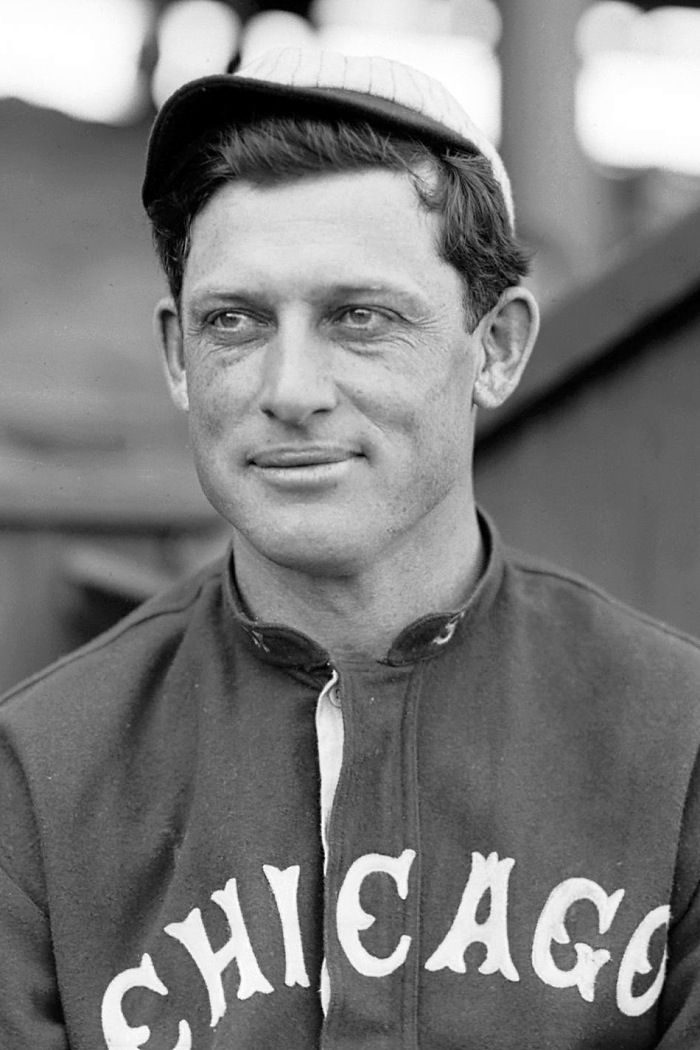
ED WALSH

Below is a survey of the White Sox' performance for each calendar decade. This chart 
shows that after a sustained run of success including four pennants and two world championships through 1919, the Sox entered a long period in which mediocrity or worse was the norm and respectability or better the exception.

Years                     W.         L.         Pct.        Championships

1901 - 1909          744       575       .564         A.L. 1901; World 1906

1910 - 1919          798       692       .536         World 1917; A.L. 1919

1920 - 1929          731       804       .476         none

1930 - 1939          678       841       .446         none

1940 - 1949          707       820       .463         none

1950 - 1959          847       693       .550         A.L. 1959

1960 - 1969          852       760       .529         none

1970 - 1979          752       853       .469         none

1980 - 1989          758       802       .486         Division 1983

1990 - 1999          816       735       .526         Division 1993, 1994

2000 - 2009          857       764       .529         Div. 2000; World 2005; Div. 2008

2010 - 2019          743       876       .459         none


LUKE APPLING

The first ten-year stretch in White Sox annals to produce a losing record was the period from 1918 through 1927. After that, no ten-year stretch produced a winning record until 1935 through 1944. 
    The Sox' worst ten-year run of all time was from 1926 through 1935. It certainly was no reflection on the performance of Hall of Famers Luke Appling and Ted Lyons 
 

Years                     W.         L.         Pct.        Notes

1926 - 1935          643       881       .422         One season over .500


NELLIE FOX

The White Sox' best ten-year run was from 1952 through 1961--a subset of the 17 consecutive winning seasons the South Siders posted from 1951 through 1967. This period featured the American League pennant of 1959 and the heyday of Luis Aparicio, Nellie Fox, Minnie Minoso, Billy Pierce, and Early Wynn, among others.
     The Sox were so consistent during these years that their cumulative winning percentage was .568 for the ten-year runs ending in 1960, 1961, and 1963--and .567 for the periods ending in 1962, 1964, and 1965. 
  

Years                     W.         L.         Pct.         

1952 - 1961          879       669       .5678        

1954 - 1963          888       676       .5677        

1951 - 1960          874       666       .5675        

1953 - 1962          883       673       .5674

1955 - 1964          892       680       .5674

1956 - 1965          896       684       .5670


FRANK THOMAS

After this, the Sox and their fans endured a dry spell from the late 1960s through the 1980s (briefly relieved by the memorable division championship of 1983). 
     The last decade of the twentieth century and the first decade of the twenty-first was a sort of golden age. Teams led by the likes of Mark Buehrle, Paul Konerko, Magglio Ordonez, Frank Thomas, and Robin Ventura captured five division titles, one American League pennant, and the first world championship for either Chicago team since 1917.  

Thursday, November 12, 2020

Abreu Adds to White Sox' Trophy Case

Jose Abreu has become the fourth White Sox player to win the American League Most Valuable Player award and the first player ever to win both Rookie of the Year and MVP in a Sox uniform. (Dick Allen won the American League MVP in 1972 after being National League Rookie of the Year in 1964.) Abreu's trophy case also includes a Most Valuable Player award from Cuba's major league, the Serie Nacional, for 2011. 

     Abreu was a star in Cuba's league for years and also represented that country in international competitions until he defected after the World Baseball Classic in 2013. He made his way to Haiti and then the Dominican Republic before signing with the White Sox for six years at a reported $68 million. After the 2019 season, he re-upped with the Sox for three years at $50 million.


JOSE ABREU

At today's prices, the White Sox have gotten their money's worth and then some, both in terms of Abreu's robust offensive production and in terms of his work ethic and leadership qualities. This year, the South Siders made the postseason for the first time since 2008, and--not coincidentally--Abreu had his best season since joining the club. At the relatively advanced age of 33, he played every game and led the league in hits, slugging, total bases, and runs batted in (knocking in 60 runs in 60 games). He also had the first three-homer game of his career, against the Cubs.

     "I'm just glad that he's on our team," said White Sox pitcher Reynaldo Lopez,  "because I can't imagine how difficult it is for the other pitcher to face him."


Below are some of the noteworthy honors won by Abreu and other White Sox over the years.

Retired Numbers 
2 - Nellie Fox
3 - Harold Baines
4 - Luke Appling
9 - Minnie Minoso
11 - Luis Aparicio
14 - Paul Konerko
16 - Ted Lyons
19 - Billy Pierce
35 - Frank Thomas
56 - Mark Buehrle
72 - Carlton Fisk

World Championship Managers
1906 - Fielder Jones
1917 - Pants Rowland
2005 - Ozzie Guillen

World Series Most Valuable Player
2005 - Jermaine Dye

American League Most Valuable Player
1959 - Nellie Fox
1972 - Dick Allen
1993 - Frank Thomas
1994 - Frank Thomas

2020 - Jose Abreu

The Sporting News Major League Player of the Year
1959 - Early Wynn
1993 - Frank Thomas
2020 - Jose Abreu

American League Cy Young Award
1959 - Early Wynn
1983 - LaMarr Hoyt
1993 - Jack McDowell

American League Rookie of the Year
1956 - Luis Aparicio
1963 - Gary Peters
1966 - Tommie Agee
1983 - Ron Kittle
1985 - Ozzie Guillen

2014 - Jose Abreu 

American League Batting Champions
1936 - Luke Appling
1943 - Luke Appling
1997 - Frank Thomas
2019 - Tim Anderson

American League Home Run Leaders
1971 - Bill Melton
1972 - Dick Allen
1974 - Dick Allen

American League Runs Batted In Leaders
1972 - Dick Allen
2019 - Jose Abreu
2020 - Jose Abreu

American League Leaders in Victories
1907 - Doc White
1908 - Ed Walsh
1917 - Eddie Cicotte
1919 - Eddie Cicotte
1925 - Ted Lyons
1927 - Ted Lyons
1957 - Billy Pierce
1959 - Early Wynn
1964 - Gary Peters
1972 - Wilbur Wood
1973 - Wilbur Wood
1982 - LaMarr Hoyt
1983 - LaMarr Hoyt
1993 - Jack McDowell

American League Leaders in Earned-Run Average
1906 - Doc White
1907 - Ed Walsh
1910 - Ed Walsh
1917 - Eddie Cicotte
1921 - Red Faber
1922 - Red Faber
1941 - Thornton Lee
1942 - Ted Lyons
1947 - Joe Haynes
1955 - Billy Pierce
1960 - Frank Baumann
1963 - Gary Peters
1966 - Gary Peters
1967 - Joel Horlen

American League Leaders in Strikeouts
1908 - Ed Walsh
1909 - Frank Smith
1911 - Ed Walsh
1953 - Billy Pierce
2003 - Esteban Loaiza
2015 - Chris Sale

American League Manager of the Year
1983 - Tony LaRussa
1990 - Jeff Torborg
1993 - Gene Lamont
2000 - Jerry Manuel
2005 - Ozzie Guillen


Check out our book Heydays: Great Stories in Chicago Sports on Amazon.   

Wednesday, November 4, 2020

Luis Robert, Gold Glover

Although he looks more like an NFL tight end or linebacker than a center fielder, Luis Robert proved throughout the White Sox' recent season that appearances can be deceiving. He has won a Rawlings Gold Glove award for his defensive accomplishments this year, and it would be no surprise if he collects a few more of these trophies going forward. Robert is the first Sox outfielder to win a Gold Glove since Ken Berry in 1970 and the first Sox rookie to do so since Tommie Agee in 1966.

LUIS ROBERT

Below is the complete list of White Sox Gold Glove winners by position.

 
Pitchers
1974 - Jim Kaat
1975 - Jim Kaat
2009 - Mark Buehrle
2010 - Mark Buehrle
2011 - Mark Buehrle
2012 - Jake Peavy
 
Catchers
1957 - Sherm Lollar
1958 - Sherm Lollar
1959 - Sherm Lollar
 
First Basemen
1977 - Jim Spencer
1981 - Mike Squires
 
Second Basemen
1957 - Nellie Fox
1959 - Nellie Fox
1960 - Nellie Fox
2019 - Yolmer Sanchez
 
Shortstops
1959 - Luis Aparicio
1960 - Luis Aparicio
1961 - Luis Aparicio
1962 - Luis Aparicio
1968 - Luis Aparicio
1970 - Luis Aparicio
 
Third Basemen
1992 - Robin Ventura
1993 - Robin Ventura
1996 - Robin Ventura
1998 - Robin Ventura
 
Outfielders
1960 - Minnie Minoso
1960 - Jim Landis
1961 - Jim Landis
1962 - Jim Landis
1963 - Jim Landis
1964 - Jim Landis
1966 - Tommie Agee
1970 - Ken Berry
2020 - Luis Robert


Check out our book Heydays: Great Stories in Chicago Sports on Amazon. 

Thursday, August 13, 2020

Go-Go Sox

On the morning of Sunday, July 26, 1959, the White Sox were in first place in the American League, half a game ahead of Cleveland. That day, the Sox split a doubleheader with Baltimore, and Cleveland took two from Washington to reclaim first place by a half game. There were no games Monday, so the Indians spent the off day atop the standings.   

A throng of 43,829 packed Comiskey Park on Tuesday night for the opener of a three-game series with the hated Yankees. Al Smith’s two-run homer in the bottom of the eighth gave the Sox a seemingly safe 4-1 edge heading into the ninth. But New York battled back, scoring twice and putting the tying run on base before veteran lefty Billy Pierce fanned Bobby Richardson to end the threat and the game. It was a gutsy effort by Pierce, who allowed 10 hits but walked none and struck out eight. He received a lengthy ovation after the final out. The Sox were back in first place.

Rain terminated the next day’s game with the Sox and New York tied 4-4. The day after that, Chicago’s popgun offense produced three decidedly unimpressive runs. The first came on a single, stolen base, safe bunt, and infield out; the second on a misjudged fly ball which fell for a double, followed by a single; and the third on a two-base error, an infield out, another error, and an infield single. It was enough, as Early Wynn limited the Yankees to six hits and one unearned run for a 3-1 decision.

It was Yankee manager Casey Stengel’s 69th birthday, and not a very happy one for the “Old Perfessor.” White Sox fans mockingly sang “Happy Birthday to You” as Stengel and his charges trudged slowly to the clubhouse entrance. The Yankees left town with a malodorous record of 48-51; they were 10½ games behind the Sox, who led the Indians by one game.

The Yankees were done. By August, there was no question that the pennant would be won by either Chicago or Cleveland—two teams that could hardly have been more different. Cleveland’s attack featured sluggers Rocky Colavito, Tito Francona, Woodie Held, and Minnie Minoso (the former Sox star and fan favorite who’d been traded for Wynn and Al Smith prior to the 1958 season). Cleveland would lead the league in home runs and finish last in stolen bases, Chicago would finish last in home runs and first in stolen bases. If the Indians were a steamroller, the White Sox were a motor scooter. “A typical White Sox rally,” owner Bill Veeck, Jr., wrote, “consisted of two bloopers, an error, a passed ball, a couple of bases on balls, and, as a final crusher, a hit batsman.”  

Throughout August, fans looked forward to the White Sox’ four-game showdown with the Indians on the last weekend of the month. Neither team let up in the weeks preceding the fateful series; the Indians went 17-9, while the Sox went 18-9.

The Sox brought a one-and-a-half-game lead into Cleveland’s colossal Municipal Stadium on the muggy evening of August 28. They were greeted by a hostile crowd of 70,398 and a virtual quagmire in the infield. Several days before, Cleveland groundskeeper Emil Bossard had begun watering the basepaths more than usual; when he was through, he had made them as soft and spongy as possible. The slow track made no difference to the plodding Indians, of course, but it was supposed to hinder the Go-Go Sox. “Chicago won’t steal any bases against us this weekend,” Bossard chortled.

Bossard’s handiwork had little effect on Friday night’s game, in which Sherm Lollar, a tower of strength all season, cracked a three-run homer in the seventh inning to snap a 3-3 tie and provide the unheralded righthander Bob Shaw his 14th victory against just four defeats. Jim Landis collected three hits, Nellie Fox and Ted Kluszewski two each.

Dick Donovan was called to emergency duty when projected starter Ken McBride came down with tonsillitis on Saturday. Donovan responded by tossing a five-hit shutout as the Sox won 2-0. Employing a variety of slow curves, sliders, and change-ups, he kept the Indians off balance all day.

      Sox skipper Al Lopez remained cautious. “We’re still going to keep playing like hell,” he said. “Nothing has been easy for us this year. We’ve won the hard way and we’ll have to keep doing it that way.” On Sunday, 66,586 Cleveland fans turned out (pushing the total for the series to almost 190,000) to see if the Indians could arrest the White Sox’ momentum. Most had long since departed by the end of the doubleheader, in which the Sox captured both games to complete a stunning sweep of the series. In the first game, Chicago trailed 2-0 in the sixth when Wynn’s home run triggered a five-run rally that paved the way to a 6-3 win. In the second game, Smith and Billy Goodman combined for five hits and five runs batted in. The game was effectively over when Turk Lown entered the fray in the sixth. He shut out the Indians for the final four innings, and the Sox triumphed 9-4.

The Indians had come into the series riding an eight-game winning streak. After leading for exactly one half inning of the 36 played, they left as a thoroughly beaten ballclub. For the White Sox, the series had been almost too good to be believed. Their record now stood at 80-49. Their advantage in the standings was five and a half games. When the Sox touched down at Midway Airport that night, they were met by a welcoming committee of thousands.

The raucous reception of August 30 was a dress rehearsal for the celebration that now seemed inevitable—and was. It was both ironic and fitting that the coup de grace was delivered in Cleveland. On September 22, Smith and Jim Rivera smashed back-to-back homers in the sixth inning, putting the Sox ahead 4-1. Wynn was touched for a run in the bottom of the sixth. Bob Shaw relieved him and carried the 4-2 margin into the ninth, when the Indians loaded the bases with one out.

Gerry Staley came on to replace Shaw. The tying and winning runs were aboard, and Vic Power was at bat for the Indians. Staley’s first offering was a sinker, low and a tad outside. Power swung and pounded a grounder up the middle. Shortstop Luis Aparicio flashed to his left, speared the ball in his glove, started to flip it to Fox covering second but changed his mind, then glided across the bag himself and fired to Kluszewski to complete the double play.

Staley’s one pitch had saved the game and wrapped up the pennant. “This was the perfect example of the way we’ve played all year,” said Veeck, “and a typical way to end it.” The clincher was Wynn’s 21st victory of the season; he wound up with a log of 22-10 and received the Cy Young Award as the finest pitcher in the major leagues (in those days, there was one award covering both leagues). The Sox’ five-game margin over the Indians was neatly accounted for by Wynn’s 6-1 mark against his former teammates.

Thursday, April 7, 2011

White Sox All-Opening Day Lineup

     The White Sox' home opener at U.S. Cellular Field is upon us, and the South Siders and their fans are anticipating an exciting season. Chairman Jerry Reinsdorf gave general manager Kenny Williams the okay to spend the money needed to stock the roster for a serious run at the pennant. The Sox, in Williams's words, are "all in" for 2011.
     We're taking a look back at the Sox' openers of the past to compile the club's All-Opening Day roster. The lists below reflect Opening Day lineups from 1920 through 2011. (The information for years prior to 1920 is not readily available.)

* Asterisks indicate consecutive years.

Most Opening Day starts
  1. Frank Thomas, 14* (1991-2004)
  2. Luke Appling, 14 (1933-1949)
  3. Nellie Fox, 13* (1951-1963)
  3. Ozzie Guillen, 13* (1985-1997)
  3. Paul Konerko, 13* (1999-2011)

First team (most Opening Day starts by position)
  P. Mark Buehrle, 9 (2002-2011)
  C. Sherm Lollar, 10 (1952-1962)
1B. Paul Konerko, 11* (2001-2011)
2B. Nellie Fox, 13* (1951-1963)
SS. Luke Appling, 14 (1933-1949)
3B. Willie Kamm, 9* (1923-1931)
LF. Bibb Falk, 7 (1921-1928)
CF. Lance Johnson, 7 (1988-1995)
RF. Harold Baines, 8* (1980-1987)
DH. Frank Thomas, 5 (1998-2004)

Second team (second most Opening Day starts by position)
  P. Billy Pierce, 7 (1951-1959)
  C. Ray Schalk, 8* (1920-1927)
1B. Frank Thomas, 9 (1991-2000)
2B. Ray Durham, 8* (1995-2002)
SS. Ozzie Guillen, 13* (1985-1997)
3B. Robin Ventura, 8 (1990-1998)
LF. Minnie Minoso, 7 (1952-1961)
CF. Chet Lemon, 6* (1976-1981)
RF. Magglio Ordonez, 7* (1998-2004)
DH. Greg Luzinski, 4* (1981-1984)

Third team (third most Opening Day starts by position)
  P. Wilbur Wood, 5* (1972-1976)
  C. Mike Tresh, 8 (1940-1948)
  C. Carlton Fisk, 8 (1981-1991)
1B. Earl Sheely, 7* (1921-1927)
2B. Eddie Collins, 7* (1920-1926)
SS. Luis Aparicio, 10 (1956-1970)
3B. Bill Melton, 7* (1969-1975)
LF. Carlos Lee, 5* (2000-2004)
CF. Mike Kreevich, 5 (1936-1941)
RF. Jermaine Dye, 5* (2005-2009)
DH. Jim Thome, 4* (2006-2009)

Friday, August 27, 2010

White Sox Honor Roll

LUKE APPLING
White Sox retired numbers:
  2 - Nellie Fox
  3 - Harold Baines
  4 - Luke Applling
  9 - Minnie Minoso
11 - Luis Aparicio
16 - Ted Lyons
19 - Billy Pierce
72 - Carlton Fisk

World championship managers:
1906 - Fielder Jones
1917 - Pants Rowland
2005 - Ozzie Guillen

American League Most Valuable Player:
1959 - Nellie Fox
1972 - Dick Allen
1993 - Frank Thomas
1994 - Frank Thomas

World Series Most Valuable Player:
2005 - Jermaine Dye

American League Cy Young Award:
1959 - Early Wynn
1983 - LaMarr Hoyt
1993 - Jack McDowell

American League Rookie of the Year:
1956 - Luis Aparicio
1963 - Gary Peters
1966 - Tommie Agee
1983 - Ron Kittle
1985 - Ozzie Guillen

Batting champions:
1936 - Luke Appling
1943 - Luke Appling
1997 - Frank Thomas

Home Run leaders:
1971 - Bill Melton
1972 - Dick Allen
1974 - Dick Allen

Runs Batted In leaders:
1972 - Dick Allen

Leaders in victories:
1907 - Doc White
1908 - Ed Walsh
1917 - Eddie Cicotte
1919 - Eddie Cicotte
1925 - Ted Lyons
1927 - Ted Lyons
1957 - Billy Pierce
1959 - Early Wynn
1964 - Gary Peters
1972 - Wilbur Wood
1973 - Wilbur Wood
1982 - LaMarr Hoyt
1983 - LaMarr Hoyt
1993 - Jack McDowell

Leaders in earned-run average:
1906 - Doc White
1907 - Ed Walsh
1910 - Ed Walsh
1917 - Eddie Cicotte
1921 - Red Faber
1922 - Red Faber
1941 - Thornton Lee
1942 - Ted Lyons
1947 - Joe Haynes
1955 - Billy Pierce
1960 - Frank Baumann
1963 - Gary Peters
1966 - Gary Peters
1967 - Joel Horlen

Leaders in strikeouts:
1908 - Ed Walsh
1909 - Frank Smith
1911 - Ed Walsh
1953 - Billy Pierce
2003 - Esteban Loaiza

Manager of the Year:
1983 - Tony LaRussa
1990 - Jeff Torborg
1993 - Gene Lamont
2000 - Jerry Manuel
2005 - Ozzie Guillen

Wednesday, March 24, 2010

Splendid Seasons: White Sox MVPs

We're remembering the 19 Chicago athletes whose splendid seasons have earned them the Most Valuable Player award for their respective leagues. Three of these players have represented the White Sox.


Nellie Fox,
1959

     “There was never a more bear-down, hard-nosed little guy than Nellie Fox,” said the great Ted Williams. Fox teamed first with Chico Carrasquel and later with Luis Aparicio to give the White Sox the slickest double-play tandem of the fifties.
     In 1959, leadoff man Aparicio and second hitter Fox supplied the octane for the pennant-winning Go-Go Sox. Aparicio stole 56 bases and scored 98 runs. Fox hit .306 with 70 RBIs, while playing every game (his consecutive-games streak eventually reached 798, a record for second basemen). Both players won Gold Gloves. In the MVP balloting, Fox preceded the man he followed in the batting order, winning the award while Aparicio was runner-up.
     It was no coincidence that Aparicio led the league in steals in each of the seven years that he and Fox played together. Fox was the ideal No. 2 hitter: he could take pitches and foul off pitches all day long without fear of striking out, and he bunted with the best of them. He led the American League for 10 straight years in the category of toughest to strike out. He also led the league in hits four times, played in 12 All-Star games (batting .386), and won three Gold Gloves.
     Fox made an indelible impression on fans with his scrappy, hustling play and the ever-present chaw of tobacco bulging out of his cheek. Listed at five-foot-nine and 160 pounds, Fox never backed down at the plate or in the field. “The most important thing to me,” said teammate Billy Pierce, “was his determination and competitiveness, which made up for some of the physical things he didn’t have. He loved the game and he played it hard.”
     Fox was elected to the Hall of Fame in 1997—but alas, he never knew it, having passed away in 1975.


Dick Allen,
1972

     One of the most talented and enigmatic players of recent decades, Dick Allen used his amazing strength and bat speed to terrorize pitchers in 1972, his first year in the American League after eight seasons in the National League as Richie Allen. Acquired by the White Sox after wearing out his welcome with three other clubs in the previous three years, he came to Chicago with a new name but with the same old attitude. He skipped batting practice, traveled separately from his teammates, and smoked on the bench. He showed up late even for the All-Star Game.
     Despite all this, Allen flourished with the Sox—for a time. Manager Chuck Tanner blithely admitted that he had one set of rules for Allen and another for the rest of the team. The recalcitrant slugger responded with a then-club-record 37 homers to go with 113 RBIs and a .308 average as the Sox stayed in contention all year; they finished five and a half games behind Oakland after bottoming out with 106 losses only two years before. A particular highlight was a doubleheader sweep of the Yankees on June 4 before a Bat Day crowd of 51,904 at Comiskey Park. In the nightcap, the Sox were trailing 4-2 in the bottom of the ninth when Allen blasted a three-run pinch-hit homer into the upper deck in left field.
     Allen used the heaviest bat in the majors, a 42-ounce war club, and launched the most wicked line drives. He literally hit the ball through the back of a wooden seat on more than one occasion. He always wore a batting helmet in the field, a reminder of his days in Philadelphia, where fans pelted him with coins, batteries, and even bottles. White Sox fans showered Allen only with love, but even so, his limited attention span finally gave out in 1974, his third year in Chicago. He quit the team with three weeks left in the season.


Frank Thomas,
1993, 1994

     Frank Thomas joined the White Sox on August 2, 1990, fully formed as a major-league star. He hit .330 in that first partial season. He never experienced the growing pains typical of rookies. He never suffered through a prolonged slump. It soon became apparent that he was the most dangerous offensive force to come along since Ted Williams, half a century before him. No one since Williams had put up such gaudy numbers so consistently from the start of his career. In his first six full seasons, Thomas batted .327 and averaged 36 homers, 116 RBIs, 106 runs scored, and 121 walks.
     The imposing, six-foot-four Thomas played football at Auburn University, where he was a little-known teammate of Heisman Trophy winner Bo Jackson. When the two were reunited with the White Sox, it was Bo’s turn to be eclipsed. In 1993, Thomas slammed 41 homers, knocked in 128 runs, and batted .317 to earn his first American League MVP award as the Sox won their division by eight games.
     In 1994, the Sox were in first place again and might have been destined for their first World Series in 35 years when a labor dispute ended the season on August 12. For the first time since 1904, there was no World Series. Thomas’s second straight MVP was bittersweet, but comparisons to the immortal Williams didn’t seem far-fetched in light of the Big Hurt’s .353 average, 38 homers, 101 RBIs, 106 runs scored, .494 on-base percentage, and .729 slugging percentage in just 113 games.
     Thomas appeared almost exclusively as a designated hitter after the age of 30, and his production declined rather sharply. He had one more monster year in 2000 as the Sox ran away with the division title; he hit .328 with 43 homers, 143 RBIs, and 115 runs scored, finishing second in the MVP voting. Unfortunately, Thomas missed the Sox' unforgettable 2005 postseason with an injury, and he was let go the following winter. By the end of his career in 2008, he ranked among the top sluggers of all time in every pertinent category. It seems safe to assume that he will soon be enshrined in Cooperstown.

Mildly Interesting Trivia Department: Frank Thomas of the White Sox, 1994 American League MVP, and Jeff Bagwell of the Houston Astros, 1994 National League MVP, were born on the same day—May 27, 1968.