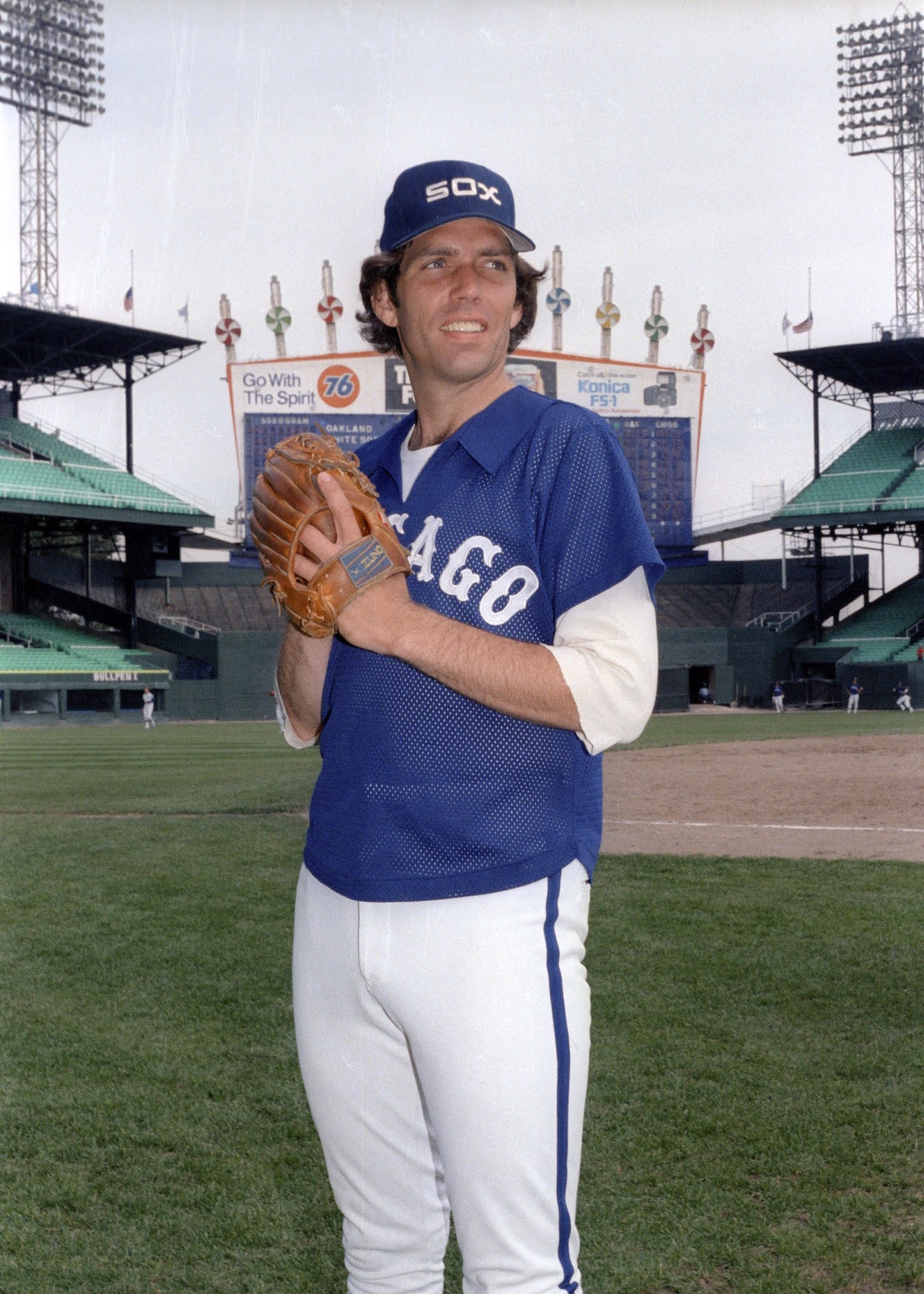
Below is the list of Chicago sports figures who passed away in 2020. We thank them all for their contributions to the greatest sports town in the world. (If we have missed anyone, please let us know in the Comments and we will correct it.)
 |
DICK ALLEN
|
Dick
Allen, 78, White Sox first baseman 1972-1974, American League Most Valuable
Player 1972, three-time All-Star with White Sox and seven-time All-Star overall
(December 7). “He has magnetism,” Sox manager Chuck Tanner said of Allen. “Like Clark Gable, say, or Marilyn Monroe. He is above the ordinary.”
 |
GLENN BECKERT
|
Glenn
Beckert, 79, Cubs second baseman 1965-1973, four-time All-Star, one-time Gold
Glove (April 12). “He’s some kind of player,” Cubs manager Leo Durocher said in 1968. “He’s the best damn second baseman in the league.”
Jim
Bolger, 88, Cubs outfielder 1957-1958 (April 9).
 |
LOU BROCK
|
Lou
Brock, 81, Cubs outfielder 1961-1964, disastrously traded to St. Louis in 1964; White Sox broadcaster 1981; National
Baseball Hall of Fame 1985 (September 6). “If I’d been here [in Chicago],” Brock once said, “the Cubs would have won the pennant in ’68 and ’69.”
Roger
Brueggemann, 75, trainer of 2015 Arlington Million winner The Pizza Man and a
fixture at Arlington Park and Hawthorne for three decades (December 14).
Ken
Burmeister, 72, DePaul University men’s basketball assistant coach 1990-1994; Loyola
University men’s basketball head coach 1994-1998 (May 19).
Kenneth
Church, 90, leading jockey at Arlington Park in 1950 and at Washington Park in
1953 (July 13).
Gil
Coan, 97, White Sox outfielder 1955 (February 4).
 |
JIMMY COLLINS
|
Jimmy
Collins, 74, Bulls guard 1970-1972; University of Illinois men’s basketball
assistant coach 1983-1996; UIC men’s basketball head coach 1996-2010, qualified for NCAA tournament three times (December
13).
Ramon
Conde, 85, White Sox third baseman 1962 (February 23).
Tony Curcillo, 89, Chicago Cardinals halfback and defensive back 1953 (December 8).
Jim
Derrington, 80, White Sox pitcher 1956- 1957 (March 12).
Angel
Echevarria, 48, Cubs first baseman/outfielder 2002 (February 7).
 |
ED FARMER
|
Ed
Farmer, 70, White Sox pitcher 1979-1981, All-Star in 1980; White Sox broadcaster
1991-2019 (April 1). “Ed grew up a Sox fan on the South Side of Chicago,” said chairman Jerry Reinsdorf, “and his allegiance
showed every single night on the radio as he welcomed his ‘friends’ to
the broadcast.”
Jesse
Freitas Sr., 99, Chicago Rockets (AAFC) quarterback 1948 (May 18).
 |
JIM FREY
|
Jim
Frey, 88, Cubs manager 1984-1986, won division championship in 1984; Cubs
broadcaster 1987; Cubs general manager 1988-1991 (April 12). “I don’t give a damn about what happened in 1969,” Frey said in 1984 when asked about the Cubs’ infamous collapse of 15 years earlier. “It has no interest or appeal to me at all.”
Carl
Garrett, 72, Bears running back 1973-1974 (August 24).
Charlie
Haeger, 37, White Sox pitcher 2006-2007 (October 3).
Jim
Hicks, 80, White Sox outfielder 1964-1966 (October 29).
 |
LES HUNTER
|
Les
Hunter, 77, Loyola University men’s basketball center 1961-1964, member of NCAA
championship team 1963, uniform number 41 retired in 1991, inducted into the
College Basketball Hall of Fame with his Loyola teammates in 2013 (March 27). “Our whole premise was to get out and run,” Hunter said of the Ramblers. “We pressured regardless of how far we were ahead or behind. A lot of teams tried to freeze the ball and we stole it.”
 |
BART JOHNSON
|
Bart
Johnson, 70, White Sox pitcher 1969-1977 (April 22).
Ben
Johnson, 88, Cubs pitcher 1959-1960 (May 8).
Lou
Johnson, 86, Cubs outfielder 1960, 1968 (September 30).
 |
JAY JOHNSTONE
|
Jay
Johnstone, 74, White Sox outfielder 1971-1972; Cubs outfielder 1982-1984
(September 26).
Howie
Judson, 94, White Sox pitcher 1948-1952 (August 18).
Matt
Keough, 64, Cubs pitcher 1986 (May 1).
Don
Larsen, 90, Cubs pitcher 1967 (January 1).
Phil
Maloney, 92, Blackhawks center 1958-1960 (February 21).
John
Matias, 75, White Sox outfielder/first baseman 1970 (April 7).
 |
MICHAEL McCASKEY
|
Michael
McCaskey, 76, Bears president 1983-1998; Bears chairman 1999-2011 (May 16).
Lindy
McDaniel, 84, Cubs pitcher 1963-1965, National League Fireman of the Year 1963
(November 14).
Jeannie
Morris, 85, Chicago sports journalist and broadcaster (December 14).
Howard
Mudd, 78, Bears guard 1969-1970 (August 12).
 |
MARKUS PAUL
|
Markus
Paul, 54, Bears safety, 1989-1993 (November 25).
Don
Pavletich, 81, White Sox catcher 1969 (March 5).
Mary
Pratt, 101, Rockford Peaches (AAGPBL) pitcher 1943-1944 and 1946-1947 (May 6).
Jack Rosenberg, 94, WGN television and radio sports editor for more than forty years (December 27).
Eldred
“Salty” Saltwell, 97, Cubs general manager 1976 (May 3).
 |
GALE SAYERS
|
Gale
Sayers, 77, Bears running back 1965-1971, nicknamed “the Kansas Comet,” NFL
Rookie of the Year 1965, NFL leading scorer 1965, NFL leading rusher 1969,
five-time All-Pro, four-time Pro Bowl, Pro Football Hall of Fame 1977, uniform
number 40 retired in 1994, ranked No. 4 among Chicago Tribune 100 greatest Bears of all time in 2019 (September 23). “He looks no different than any other back when he’s coming at you,” 49ers defensive back George Donnelly said of Sayers, “but when he gets there he’s gone.”
 |
TOM SEAVER
|
Tom
Seaver, 75, White Sox pitcher 1984-1986, won his 300th career game for Sox in 1985; National Baseball Hall of Fame 1992
(August 31). “It was apparent in Tom Seaver’s minor-league debut that he was ready for the
majors,” said Hall of Fame manager Earl Weaver. “He had an excellent fastball and slider, and he put them
precisely where he wanted to.”
Dick
Scott, 86, Cubs pitcher 1964 (February 16).
 |
JERRY SLOAN
|
Jerry
Sloan, 78, Bulls guard 1966-1976, nicknamed “the Original Bull” and “Mr.
Chicago Bull,” two-time All-Star, six-time All-Defensive team, uniform number 4
retired in 1978; Bulls head coach 1979-1982; Naismith Basketball Hall of Fame
2009 (May 22). “The fans responded to the kind of team we were,” Sloan said of the early Bulls, “because Chicago is a blue-collar city, and the players were much the same way.”
 |
PAT STAPLETON
|
Pat
“Whitey” Stapleton, 79, Blackhawks defenseman 1965-1973, captain 1969-1970, three-time All-Star;
Chicago Cougars (WHA) defenseman and head coach 1973-1975; Cougars co-owner 1974-1975 (April 9). “He possessed superior acumen while defending,” wrote Bob Verdi, “but was also gifted at generating rushes. In 1968-69, he garnered 50 assists, a National Hockey League record [for defensemen] at the time.”
 |
ROOSEVELT TAYLOR
|
Roosevelt
“Rosey” Taylor, 82, Bears safety 1961-1969, All-Pro 1963, Pro Bowl 1963 and 1968, led NFL in interceptions 1963, member of
1963 world championship team, ranked No. 43 among Chicago Tribune 100 greatest Bears of all time in 2019 (May 29). “Bear opponents have learned, to their dismay, that the odds somehow seem to favor Taylor in a battle for the ball,” Cooper Rollow of the Tribune wrote. “Several reasons have been cited for this edge— competitive instinct, eyesight, reflexes—but the key may be Taylor’s tremendous jumping ability.”
Tony
Taylor, 84, Cubs second baseman 1958-1960 (July 16).
Earl
Thomas, 71, Bears wide receiver/tight end 1971-1973 (July 4).
Claudell
Washington, 65, White Sox outfielder 1978-1980 (June 10).
 |
RYAN WETNIGHT
|
Ryan
Wetnight, 49, Bears tight end 1993-1999 (May 1).
George
Yankowski, 97, White Sox catcher 1949 (February 25).
Check out our book Heydays: Great Stories in Chicago Sports on Amazon.