Showing posts with label Chicago Cubs. Show all posts

Friday, December 31, 2021

In Memoriam, 2021

Prominent Chicago sports figures who passed away in 2021 include Tony Esposito, the Blackhawks Hall of Fame goalie from 1969 through 1984; Jerry Harkness, captain of the Loyola Ramblers’ 1963 NCAA champion basketball team; LaMarr Hoyt, who won the American League Cy Young Award for the 1983 White Sox; and Roland Hemond, the beloved baseball executive who (along with Bill Veeck Jr.) saved the Sox for Chicago when it seemed inevitable that they would be gone.
     
TONY ESPOSITO

The people listed below each played a part in making Chicago the greatest sports town in the world. They will be missed.  

STAN ALBECK

Stan Albeck, 89, Bulls head coach 1985-1986; Bradley University men’s basketball head coach 1986-1991 (March 25).

Joe Altobelli, 88, Cubs manager 1991 (March 3).


LOU ANGOTTI

Lou Angotti, 83, Blackhawks center/right wing 1965-1967, 1969-1973; Chicago Cougars (WHA) center 1974-1975 (September 16).

LIONEL ANTOINE

Lionel Antoine
, 71, Bears tackle 1972-1978, selected third overall in 1972 NFL draft (December 14).

Jon Arnett, 85, Bears halfback/end 1964-1966 (January 16).

Art Anderson, 84, Bears offensive tackle 1961-1962 (February 25).


RALPH BACKSTROM

Ralph Backstrom
, 83, Blackhawks center 1972-1973; Chicago Cougars (WHA) center 1973-1975, co-owner 1974-1975 (February 7).

Hal Breeden, 76, Cubs first baseman 1971 (May 3).

Hy Cohen, 90, Cubs pitcher 1955 (February 4).
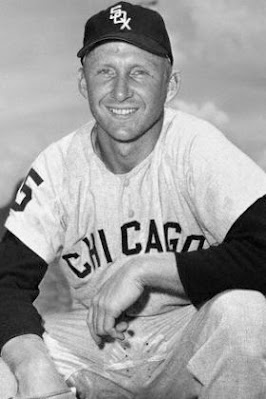

JOE CUNNINGHAM

Joe Cunningham
, 89, White Sox first baseman/outfielder 1962-1964 (March 25).

Ralph Davis, 82, Chicago Packers (NBA) guard 1961-1962 (May 30).

Jeff Dickerson, 43, Bears reporter for ESPN Radio 2001-2021 and ESPN.com 2009-2021 (December 28).

Solly Drake, 90, Cubs outfielder 1956 (August 18).


TONY ESPOSITO

Tony Esposito, 78, Blackhawks goalie 1969-1984, five-time All-Star, three-time Vezina Trophy winner as outstanding goalie in NHL, Calder Trophy winner as NHL rookie of the year 1970, elected to Hockey Hall of Fame in 1988, sweater number 35 retired by Blackhawks in 1988, named among 100 greatest hockey players of all time in 2017, ranked by hockey-reference.com as the greatest player in Blackhawks history (August 10).

Adrian Garrett, 78, Cubs catcher/first baseman/outfielder 1970, 1973-1975 (April 22).

Howie Glover, 86, Blackhawks right wing 1958-1959 (June 15).

Johnny Groth, 95, White Sox outfielder 1954-1955 (August 7).

Shaler Halimon, 76, Bulls guard 1969-1971 (April 19).

Joe Hardy, 75, Chicago Cougars (WHA) center 1973-1975 (February 19).


JERRY HARKNESS

Jerry Harkness
, 81, Loyola University men’s basketball point guard, 1960-1963, captain of 1963 NCAA championship team, first-team All-American 1963, uniform number 15 retired in 1991, inducted into the College Basketball Hall of Fame with his Loyola teammates in 2013 (August 24).

Chuck Hartenstein, 79, Cubs pitcher 1966-1968 (October 2).

Geno Hayes, 33, Bears linebacker 2012 (April 26).

Jimmy Hayes, 31, Blackhawks right wing 2011-2013 (August 23).


ROLAND HEMOND

Roland Hemond
, 92, White Sox general manager 1970-1985, senior vice president 2001-2007, The Sporting News Major League Executive of the Year 1972; founded Arizona Fall League 1992; recipient of Buck O’Neil Lifetime Achievement Award from National Baseball Hall of Fame 2011 (December 12).


LaMARR HOYT

LaMarr Hoyt
, 66, White Sox pitcher 1979-1984, American League Cy Young Award 1983, led American League in wins 1982 and 1983 (November 29).

Doug Jones, 64, Cubs pitcher 1996 (November 22).

Don Kojis, 82, Bulls forward 1966-67, started first game in franchise history on October 15, 1966 (November 19).


ROGER LeCLERC

Roger LeClerc
, 84, Bears placekicker and linebacker 1960-1966, member of 1963 world championship team (January 21).

Cyril Pinder, 74, Bears running back 1971-1972 (January 23).


JUAN PIZARRO

Juan Pizarro
, 84, White Sox pitcher 1961-1966, All-Star 1963-1964; Cubs pitcher 1970-1973 (February 18).

Ken Reitz, 69, Cubs third baseman 1981 (March 31).

John Roach, 87, Chicago Cardinals quarterback/defensive back 1956, 1959 (February 18).


EDDIE ROBINSON

Eddie Robinson
, 100, White Sox first baseman 1950-1952, All-Star 1951-1952 (October 4).

Bobby Schmautz, Blackhawks right wing 1967-1969 (March 28).

Tom Simpson, 93, Cubs pitcher 1953 (February 7).

Fred Stanfield, 77, Blackhawks center/wing 1964-1967 (September 13).

Wayne Terwilliger, 95, Cubs second baseman 1949-1951 (February 3).


DICK TIDROW

Dick Tidrow
, 74, Cubs pitcher 1979-1982; White Sox pitcher 1983 (July 10).

Vito Valentinetti, 92, White Sox pitcher 1954; Cubs pitcher 1956-1957 (August 5).

Granville Waiters, 60, Bulls center 1986-1988 (March 23).


Check out our book Heydays: Great Stories in Chicago Sports on Amazon. 


Wednesday, December 8, 2021

Worth a Thousand Words: Buck O'Neil

John Buck ONeil, who was (finally) elected to the National Baseball Hall of Fame this week, became the first Black coach in the major leagues when he signed on with the Cubs in 1962. That was a significant accomplishment in its own right, but it ranks as little more than a footnote when one considers the full sweep of O’Neil’s careerwhich stretched from his first taste of semi-pro ball in 1924 (at age 12) to his retirement as a part-time scout in 2006 (the same year he passed away at 94).

BUCK O'NEIL AS A CUBS COACH.

     Much of O’Neil’s career was spent in the Negro American League, most notably as a player, manager, and executive with the Kansas City Monarchs. In the latter capacity, he helped engineer the Cubs’ acquisition of Ernie Banks from the Monarchs in 1953. He later served as a scout for the Cubs, signing Lou Brock, Oscar Gamble, Lee Smith, and Joe Carter, among others, and acting as a mentor and confidante to Billy Williams.
     In 1994, O’Neil stole the show in Ken Burns’s acclaimed PBS documentary series Baseball. His ebullient personality and riveting stories fascinated millions of people who had never heard of him before.
     Around the same time, he co-founded America’s Negro Leagues Baseball Museum in Kansas City and donated his own personal memorabilia to get the museum started. 
     In 2005, the National Baseball Hall of Fame set up a special committee to select previously overlooked Negro Leagues players and owners for induction. Incredibly, O’Neil did not make the cutbut, generous even to a fault, he showed up on induction day at Cooperstown and spoke eloquently on behalf of the 16 men and one woman who were selected.
     I’m not bitter, O’Neil said at the time. My grandfather was a slave. He was not bitter. I learned that from him. And you know what? I wouldn’t trade my life for anybody’s. 

Check out our book Heydays: Great Stories in Chicago Sports on Amazon.  
 

Friday, September 10, 2021

Chicago Cubs Trophy Case

Kris Bryant and the San Francisco Giants are visiting the Cubs at Wrigley Field this weekend, marking the first time that Bryant has played against his old teammates. When Bryant in 2016 made the most important assist by a Cub since at least 1908, he was in the midst of a streak that saw him win College Player of the Year, Minor League Player of the Year, National League Rookie of the Year, and National League Most Valuable Player in consecutive seasons. It seems fair to doubt whether anyone will ever equal that particular feat again.

KRIS BRYANT
    

Below are some of the noteworthy honors won by Bryant and other Cubs over the years.

Retired Numbers
31 - Greg Maddux 

World Championship Managers
1907 - Frank Chance
1908 - Frank Chance
2016 - Joe Maddon

World Series Most Valuable Player
2016 - Ben Zobrist

National League Most Valuable Player
1911 - Frank "Wildfire" Schulte
1929 - Rogers Hornsby
1935 - Gabby Hartnett
1945 - Phil Cavarretta
1952 - Hank Sauer
1958 - Ernie Banks
1959 - Ernie Banks
1984 - Ryne Sandberg
1987 - Andre Dawson
1998 - Sammy Sosa
2016 - Kris Bryant

The Sporting News Major League Player of the Year
1972 - Billy Williams
1984 - Ryne Sandberg
1998 - Sammy Sosa

National League Cy Young Award
1971 - Fergie Jenkins
1979 - Bruce Sutter
1984 - Rick Sutcliffe
1992 - Greg Maddux
2015 - Jake Arrieta

National League Rookie of the Year
1961 - Billy Williams
1962 - Ken Hubbs
1989 - Jerome Walton
1998 - Kerry Wood
2008 - Geovany Soto

2015 - Kris Bryant

National League Batting Champion
1876 - Ross Barnes
1879 - Cap Anson
1880 - George Gore
1881 - Cap Anson
1886 - King Kelly
1887 - Cap Anson
1888 - Cap Anson
1912 - Heinie Zimmerman
1945 - Phil Cavarretta
1975 - Bill Madlock
1976 - Bill Madlock
1980 - Bill Buckner
2005 - Derrek Lee

National League Home Run Leader
1884 - Ned Williamson
1885 - Abner Dalrymple
1888 - Jimmy Ryan
1890 - Walt Wilmot
1910 - Frank "Wildfire" Schulte
1911 - Frank "Wildfire" Schulte
1912 - Heinie Zimmerman
1916 - Cy Williams
1926 - Hack Wilson
1927 - Hack Wilson
1928 - Hack Wilson
1930 - Hack Wilson
1943 - Bill Nicholson
1944 - Bill Nicholson
1952 - Hank Sauer
1958 - Ernie Banks
1960 - Ernie Banks
1979 - Dave Kingman
1987 - Andre Dawson
1990 - Ryne Sandberg
2000 - Sammy Sosa
2002 - Sammy Sosa
 

National League Runs Batted In Leader
1876 - Deacon White
1880 - Cap Anson
1881 - Cap Anson
1882 - Cap Anson
1884 - Cap Anson
1885 - Cap Anson
1886 - Cap Anson
1888 - Cap Anson
1891 - Cap Anson
1906 - Harry Steinfeldt
1911 - Frank "Wildfire" Schulte
1912 - Heinie Zimmerman
1929 - Hack Wilson
1930 - Hack Wilson
1943 - Bill Nicholson
1944 - Bill Nicholson
1952 - Hank Sauer

1958 - Ernie Banks
1959 - Ernie Banks
1987 - Andre Dawson
1998 - Sammy Sosa
2018 - Javier Baez

National League Leader in Victories
1876 - Al Spalding
1881 - Larry Corcoran
1885 - John Clarkson
1887 - John Clarkson
1890 - Bill Hutchison
1891 - Bill Hutchison
1892 - Bill Hutchison
1909 - Mordecai Brown
1912 - Larry Cheney
1918 - Hippo Vaughn
1920 - Grover Alexander
1927 - Charlie Root
1929 - Pat Malone
1930 - Pat Malone
1932 - Lon Warneke
1938 - Bill Lee

1964 - Larry Jackson
1971 - Fergie Jenkins
1987 - Rick Sutcliffe

1992 - Greg Maddux
2015 - Jake Arrieta
2018 - Jon Lester
2020 - Yu Darvish

National League Leader in Earned-Run Average
1882 - Larry Corcoran
1898 - Clark Griffith
1902 - Jack Taylor
1906 - Mordecai Brown
1907 - Jack Pfiester
1910 - King Cole
1918 - Hippo Vaughn
1919 - Grover Alexander
1920 - Grover Alexander
1932 - Lon Warneke
1938 - Bill Lee
1945 - Ray Prim
2016 - Kyle Hendricks

National League Leader in Strikeouts
1880 - Larry Corcoran
1885 - John Clarkson
1887 - John Clarkson
1892 - Bill Hutchison
1909 - Orval Overall
1918 - Hippo Vaughn
1919 - Hippo Vaughn
1920 - Grover Alexander
1929 - Pat Malone

1938 - Clay Bryant

1955 - Sam Jones
1956 - Sam Jones
1969 - Fergie Jenkins

2003 - Kerry Wood

National League Manager of the Year
1984 - Jim Frey
1989 - Don Zimmer
2008 - Lou Piniella
2015 - Joe Maddon


Check out our book Heydays: Great Stories in Chicago Sports on Amazon.  

Friday, August 20, 2021

'Twas Thirty Years Ago: Chicago Sports Memories of 1991

 After losing the Eastern Conference finals to the Detroit Pistons in both 1989 and 1990, the Bulls vowed that it would not happen again in 1991. They won 20 of 21 games during a late-season surge that saw them overtake Detroit for the division title. Michael Jordan, in his seventh season, earned his second Most Valuable Player award, while fourth-year men Scottie Pippen and Horace Grant emerged as key contributors.
     
MICHAEL JORDAN

In the postseason, the Bulls made quick work of the New York Knicks (three games to none) and Philadelphia 76ers (four games to one) to set up the opportunity that they had waited for all year—a rematch with Detroit in the conference finals.
     The Bulls not only won the series; they swept it in four straight games. They trailed for just 13 of the 192 minutes played. Detroit coach Chuck Daly frankly admitted that his team had no answer for the Bulls' quickness, athleticism, and desire. As the clock ticked down in the final game, Detroit's Isiah Thomas, Bill Laimbeer, Mark Aguirre, and Dennis Rodman embarrassed themselves more thoroughly than the Bulls' dominance had. They left the bench and slinked into the locker room before the game was over. 
     The Bulls then dispatched Magic Johnson and the Los Angeles Lakers with surprising ease in the NBA Finals to capture their first world championship. Jordan cradled the trophy in his arms and wept for joy, but also for relief that he was no longer a superstar whose team had never won a title. He didn't know yet that this first ascent to the pinnacle was not the culmination of his career, but just the beginning of a new phase.
(Likewise for Phil Jackson, who had won two titles as a player and now had his first as a head coach. He would add ten more before he was through, setting a record that will last a long time.) 
     "They still haven't proved anything," Rodman had said after the Bulls eliminated the Pistons. "They've got to win about five or six [championships] before they're a great team." The Bulls obliged by capturing half a dozen world championships before the decade was out. Who could have guessed that Rodman himself would be aboard for the second three-peat from 1996 through 1998?

     
ED BELFOUR

The Blackhawks sailed through the 1990-91 season with a record of 49-23-8, racking up 106 points and capturing the President's Trophy as NHL regular-season champions. Ed Belfour won the Calder Trophy as rookie of the year and the Vezina Trophy as the league's outstanding goalie. Laconic veteran right wing Steve Larmer and brash young center Jeremy Roenick were the club's top offensive threats, while Chicago native Chris Chelios, newly acquired from Montreal in a trade for star center Denis Savard, anchored the backline. The Hawks went into the postseason with justifiably high hopes—but they failed to advance beyond the first round. They lost the first series to the Minnesota North Stars, four games to two.

     
NEAL ANDERSON

In Mike Ditka's 10th year as their head coach, the Bears went 11-5 and qualified for the NFL playoffs as a wild-card entry. The streaky Bears won their first four games, lost two, won five, lost two, won two, and lost one. They were routed 52-14 by San Francisco in the season finale. The 49ers (who finished at 10-6) had already been eliminated from the postseason, and they took out their frustration on the Bears before a national audience on Monday Night Football.
     The Bears lost to Dallas, 17-13, at Soldier Field in the divisional playoff round. It turned out to be their last playoff game under Ditka, whose postseason record ended up at 6-6. 
      The Bears sent five players to the Pro Bowl: running back Neal Anderson, center Jay Hilgenberg, linebacker Mike Singletary, strong safety Shaun Gayle, and free safety Mark Carrier.

     
FRANK THOMAS

The White Sox moved into the new Comiskey Park (now known as Guaranteed Rate Field), directly across 35th Street from the site of their previous home. They drew over 2.9 million to the new park, shattering the franchise attendance record by 800,000. Coming off an excellent showing in 1990, the Sox slipped a bit in the standings, going 87-75 to finish eight games behind the world-champion Minnesota Twins. On the plus side, a pair of 23-year-olds, first baseman Frank Thomas and third baseman Robin Ventura, established themselves as rising stars.
     On August 11, 21-year-old lefty Wilson Alvarez made his White Sox debut a memorable one, tossing a no-hitter at Baltimore. (He had started one game for the Texas Rangers in 1989, becoming the first person born in the 1970s to play in the major leagues.) The 7-0 victory put the Sox 20 games over .500, but they proceeded to drop 15 of the next 17 and never threatened thereafter.

     
DON ZIMMER

The Cubs came into the season with three new big-name, big-money free agents on the roster—outfielder George Bell, lefty starter Danny Jackson, and closer Dave Smith. None of them performed up to expectations, and manager Don Zimmer didn't last through May. Club president Don Grenesko mentioned to reporters that Zimmer, like every employee of the Tribune Company, would be subject to an annual performance evaluation. When Zimmer (who was not familiar with or agreeable to the practices of corporate "suits" like Grenesko) took offense and demanded that he receive his evaluation then and there, Grenesko obliged by firing him. General manager Jim Frey, a boyhood friend of Zimmer's, apparently was not consulted.
     Zimmer's replacement was Iowa Cubs skipper Jim Essian, a catcher on the White Sox' beloved "South Side Hit Men" team of 1977. Essian guided the Cubs to a 59-63 mark for the remainder of the season and never managed in the majors again. Frey was also shown the door after the season, and he too was replaced by a White Sox alumnus, Larry Himes.
     
BLACK TIE AFFAIR

Owned by suburban auto dealer Jeff Sullivan and trained by Ernie Poulos, the Irish-bred gray stallion Black Tie Affair won his last six starts at six different racetracks—all in graded-stakes competition—to take home the Eclipse Award as thoroughbred Horse of the Year. The five-year-old was the first Chicagoland-based Horse of the Year since the 1950s, and he remains the last to date. Given the lamentable state of racing in Illinois, he was almost certainly the last ever.

 
Check out our book Heydays: Great Stories in Chicago Sports on Amazon. 


Saturday, August 14, 2021

Jake Arrieta and the 2015 Cubs

Jake Arrietas second tour of duty with the Cubs recently ended with his unconditional release after a series of disastrous outings that gave club president Jed Hoyer no alternative but to pull the plug. But it wasnt so long ago that Arrieta’s emergence as the best pitcher in baseball signalled that the Cubs infamous world championship drought was likely to end sooner rather than later.
Arrieta started the 2015 season at 4-4 before winning 18 of his last 20 starts. For good measure, he then won his first nine decisions in 2016. For almost exactly a year—June 4, 2015 to May 31, 2016—Arrieta went 27-2 with a 1.32 ERA, an 0.81 WHIP, and two no-hitters.
The passage below reviews the Cubs heady late-season run in 2015, for which Arrieta deserved much of the credit.   
 
  
JAKE ARRIETA

After 99 games, the 2015 Cubs were 52-47. What would happen next? Would they a) fade away as the pennant race heated up? b) continue to muddle along near the break-even mark? or c) prove to be genuine contenders?
The correct answer is “c.” The rebuilt Cubs were for real. They won 15 of their next 16 games, including a four-game sweep of the San Francisco Giants (one of their main rivals for a postseason berth) at Wrigley Field. They won more games after August 1 than any other team in either league. They ended up at 97-65, an amazing achievement for a club which featured four rookies (Kris Bryant, Addison Russell, Kyle Schwarber, and Jorge Soler) in the starting lineup and whose oldest regular (catcher Miguel Montero) was just 31.
The Cubs’ record was the third best in all of baseball—but also third in their own division, behind St. Louis and Pittsburgh. Therefore, they needed to win the National League wild-card game vs. the Pirates in order to go any further. Fortunately, the right man for the job was on hand; righthander Jake Arrieta was in the midst of one of the greatest stretches for any pitcher in history. Over his last 20 starts, he had gone 16-1 with an 0.86 earned run average and three shutouts, including a no-hitter at Los Angeles on August 30. He was soon to receive the Cy Young Award.
Arrieta remained true to form in the wild-card game. He went the distance in blanking the Pirates on five hits and no walks, while striking out eleven. Dexter Fowler scored three runs, Schwarber knocked in three, both homered, and the Cubs won 4-0. 
After the game, manager Joe Maddon was asked if he’d had a maximum pitch count in mind for his ace. “Yes, I did,” he replied. “Infinity.”
Next, the Cubs dispatched the arch-rival Cardinals in the National League Division Series. After dropping the first game 4-0, the Cubs bludgeoned St. Louis pitchers for 20 runs in the next three games, all victories. They also pounded ten home runs, including a monumental shot by Schwarber that landed atop the new video board behind the right-field bleachers at Wrigley.
The Cubs advanced to their first National League Championship Series since 2003 with high hopes and growing respect from all quarters. Alas, they ran into the proverbial buzzsaw in the form of the New York Mets’ outstanding starting rotation. The Cubs were swept out of the postseason in four games.
It was a disappointing end to a thrilling season, but in truth the Cubs had been playing with house money. The rebuild was ahead of schedule, and its ultimate objective was just a year away.


Check out our book Heydays: Great Stories in Chicago Sports on Amazon.