Showing posts with label Chicago Bears. Show all posts

Friday, December 31, 2021

In Memoriam, 2021

Prominent Chicago sports figures who passed away in 2021 include Tony Esposito, the Blackhawks Hall of Fame goalie from 1969 through 1984; Jerry Harkness, captain of the Loyola Ramblers’ 1963 NCAA champion basketball team; LaMarr Hoyt, who won the American League Cy Young Award for the 1983 White Sox; and Roland Hemond, the beloved baseball executive who (along with Bill Veeck Jr.) saved the Sox for Chicago when it seemed inevitable that they would be gone.
     
TONY ESPOSITO

The people listed below each played a part in making Chicago the greatest sports town in the world. They will be missed.  

STAN ALBECK

Stan Albeck, 89, Bulls head coach 1985-1986; Bradley University men’s basketball head coach 1986-1991 (March 25).

Joe Altobelli, 88, Cubs manager 1991 (March 3).


LOU ANGOTTI

Lou Angotti, 83, Blackhawks center/right wing 1965-1967, 1969-1973; Chicago Cougars (WHA) center 1974-1975 (September 16).

LIONEL ANTOINE

Lionel Antoine
, 71, Bears tackle 1972-1978, selected third overall in 1972 NFL draft (December 14).

Jon Arnett, 85, Bears halfback/end 1964-1966 (January 16).

Art Anderson, 84, Bears offensive tackle 1961-1962 (February 25).


RALPH BACKSTROM

Ralph Backstrom
, 83, Blackhawks center 1972-1973; Chicago Cougars (WHA) center 1973-1975, co-owner 1974-1975 (February 7).

Hal Breeden, 76, Cubs first baseman 1971 (May 3).

Hy Cohen, 90, Cubs pitcher 1955 (February 4).
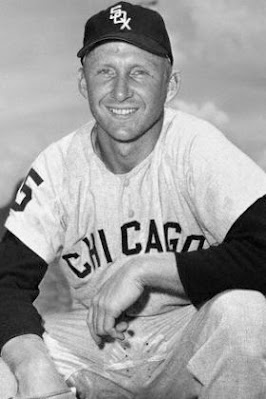

JOE CUNNINGHAM

Joe Cunningham
, 89, White Sox first baseman/outfielder 1962-1964 (March 25).

Ralph Davis, 82, Chicago Packers (NBA) guard 1961-1962 (May 30).

Jeff Dickerson, 43, Bears reporter for ESPN Radio 2001-2021 and ESPN.com 2009-2021 (December 28).

Solly Drake, 90, Cubs outfielder 1956 (August 18).


TONY ESPOSITO

Tony Esposito, 78, Blackhawks goalie 1969-1984, five-time All-Star, three-time Vezina Trophy winner as outstanding goalie in NHL, Calder Trophy winner as NHL rookie of the year 1970, elected to Hockey Hall of Fame in 1988, sweater number 35 retired by Blackhawks in 1988, named among 100 greatest hockey players of all time in 2017, ranked by hockey-reference.com as the greatest player in Blackhawks history (August 10).

Adrian Garrett, 78, Cubs catcher/first baseman/outfielder 1970, 1973-1975 (April 22).

Howie Glover, 86, Blackhawks right wing 1958-1959 (June 15).

Johnny Groth, 95, White Sox outfielder 1954-1955 (August 7).

Shaler Halimon, 76, Bulls guard 1969-1971 (April 19).

Joe Hardy, 75, Chicago Cougars (WHA) center 1973-1975 (February 19).


JERRY HARKNESS

Jerry Harkness
, 81, Loyola University men’s basketball point guard, 1960-1963, captain of 1963 NCAA championship team, first-team All-American 1963, uniform number 15 retired in 1991, inducted into the College Basketball Hall of Fame with his Loyola teammates in 2013 (August 24).

Chuck Hartenstein, 79, Cubs pitcher 1966-1968 (October 2).

Geno Hayes, 33, Bears linebacker 2012 (April 26).

Jimmy Hayes, 31, Blackhawks right wing 2011-2013 (August 23).


ROLAND HEMOND

Roland Hemond
, 92, White Sox general manager 1970-1985, senior vice president 2001-2007, The Sporting News Major League Executive of the Year 1972; founded Arizona Fall League 1992; recipient of Buck O’Neil Lifetime Achievement Award from National Baseball Hall of Fame 2011 (December 12).


LaMARR HOYT

LaMarr Hoyt
, 66, White Sox pitcher 1979-1984, American League Cy Young Award 1983, led American League in wins 1982 and 1983 (November 29).

Doug Jones, 64, Cubs pitcher 1996 (November 22).

Don Kojis, 82, Bulls forward 1966-67, started first game in franchise history on October 15, 1966 (November 19).


ROGER LeCLERC

Roger LeClerc
, 84, Bears placekicker and linebacker 1960-1966, member of 1963 world championship team (January 21).

Cyril Pinder, 74, Bears running back 1971-1972 (January 23).


JUAN PIZARRO

Juan Pizarro
, 84, White Sox pitcher 1961-1966, All-Star 1963-1964; Cubs pitcher 1970-1973 (February 18).

Ken Reitz, 69, Cubs third baseman 1981 (March 31).

John Roach, 87, Chicago Cardinals quarterback/defensive back 1956, 1959 (February 18).


EDDIE ROBINSON

Eddie Robinson
, 100, White Sox first baseman 1950-1952, All-Star 1951-1952 (October 4).

Bobby Schmautz, Blackhawks right wing 1967-1969 (March 28).

Tom Simpson, 93, Cubs pitcher 1953 (February 7).

Fred Stanfield, 77, Blackhawks center/wing 1964-1967 (September 13).

Wayne Terwilliger, 95, Cubs second baseman 1949-1951 (February 3).


DICK TIDROW

Dick Tidrow
, 74, Cubs pitcher 1979-1982; White Sox pitcher 1983 (July 10).

Vito Valentinetti, 92, White Sox pitcher 1954; Cubs pitcher 1956-1957 (August 5).

Granville Waiters, 60, Bulls center 1986-1988 (March 23).


Check out our book Heydays: Great Stories in Chicago Sports on Amazon. 


Wednesday, December 29, 2021

John Madden, 1936 - 2021

John Madden was known to successive generations as the winning coach in Super Bowl XI, as the man who revolutionized the role of analyst in sports broadcasting (receiving 16 Emmy awards in the process), and as the face of the most popular sports video game ever produced.
     
JOHN MADDEN ARRIVES AT WALTER PAYTON'S FUNERAL.

Madden never played, coached, or lived in Chicago, but he did have a Chicago connection thats worthy of mention. From the early 1980s until he passed away this week, Madden was unequivocal that Bears immortal Walter Payton ranked as his favorite player of all time.
     Madden spoke at Paytons funeral in 1999. Too many people judge a running back only by how many rushing yards he has, Madden said that day. You seldom hear how many passes a running back caught for how many yards. And you hardly ever hear how good a blocker he is, either as a pass blocker, picking up a blitzing linebacker, or as a run blocker for the other running backbut thats how coaches evaluate a running back. And thats why Walter Payton is the best running back Ive ever seen.

Check out our book Heydays: Great Stories in Chicago Sports on Amazon.  

Friday, August 27, 2021

Bears First-Round Draft Picks

 The first two players selected in the 1965 NFL draft, running backs Tucker Frederickson (New York Giants) and Ken Willard (San Francisco 49ers) ended up being good but not great. The next two picks belonged to the Bears, who selected two of the greatest players of all time--Dick Butkus and Gale Sayers.
     From 1975 (Walter Payton) through 1990 (Mark Carrier), every player selected by the Bears in the first round of the NFL draft became a productive player, and most became stars. For the past 30 years, it has been a lot more bad than good. Brian Urlacher is the only certified all-timer in the group, at least so far, while Tommie Harris and Kyle Long were stars that shone briefly. 
     The Bears' selection of quarterback Mitchell Trubisky with the second overall pick in 2017 will go down in history, and not in a good way. As every Bears fan knows all too well, general manager Ryan Pace traded up to get Trubisky while the great Patrick Mahomes was still available. Of course, the Bears also traded up this year to acquire Justin Fields--and let's hope that is where the comparison ends.

JUSTIN FIELDS

Below is the complete list of Bears first-round draft choices. The player's overall draft position is in parentheses, and an asterisk indicates a Hall of Famer. 

1936 - Joe Stydahar, tackle, West Virginia (6)*
1937 - Les McDonald, end, Nebraska (8)
1938 - Joe Gray, back, Oregon State (10)
1939 - Sid Luckman, quarterback, Columbia (2)*
1939 - Bill Osmanski, fullback, Holy Cross (6)

1940 - Bulldog Turner, center, Hardin-Simmons (7)*
1941 - Tom Harmon, halfback, Michigan (1)
1941 - Norm Standlee, fullback, Stanford (3)
1941 - Don Scott, back, Ohio State (9)
1942 - Frankie Albert, quarterback, Stanford (10)
1943 - Bob Steuber, halfback, DePauw (9)
1944 - Ray Evans, tailback, Kansas (9)
1945 - Don Lund, back, Michigan (7)
1946 - Johnny Lujack, quarterback, Notre Dame (4)
1947 - Bob Fenimore, halfback, Oklahoma State (1)
1947 - Don Kindt, defensive back, Wisconsin (11)
1948 - Bobby Layne, quarterback, Texas (3)*
1948 - Max Bumgardner, defensive end, Texas (10)
1949 - Dick Harris, center, Texas (11)

1950 - Chuck Hunsinger, halfback, Florida (3)
1950 - Fred Morrison, fullback, Ohio State (10)
1951 - Bob Williams, quarterback, Notre Dame (2)
1951 - Gene Schroeder, end, Virginia (12)
1952 - Jim Dooley, back, Miami - Florida (8)
1953 - Billy Anderson, defensive back, Compton - Calif. (6)
1954 - Stan Wallace, defensive back, Illinois (6)
1955 - Ron Drzewiecki, halfback, Marquette (11)
1956 - Tex Schriewer, end, Texas (10)
1957 - Earl Leggett, defensive tackle, LSU (13)
1958 - Chuck Howley, linebacker, West Virginia (7)
1959 - Don Clark, back, Ohio State (7)

1960 - Roger Davis, guard, Syracuse (7)
1961 - Mike Ditka, tight end, Pittsburgh (5)*
1962 - Ronnie Bull, running back, Baylor (7)
1963 - Dave Behrman, center, Michigan State (11)
1964 - Dick Evey, defensive tackle, Tennessee (14)
1965 - Dick Butkus, linebacker, Illinois (3)*
1965 - Gale Sayers, running back, Kansas (4)*
1965 - Steve DeLong, defensive end, Tennessee (6)
1966 - George Rice, defensive tackle, LSU (12)
1967 - Loyd Phillips, defensive end, Arkansas (10)
1968 - Mike Hull, running back, USC (16)
1969 - Rufus Mayes, tackle, Ohio State (14)

1970 - none
1971 - Joe Moore, running back, Missouri (11)
1972 - Lionel Antoine, tackle, Southern Illinois (3)
1972 - Craig Clemons, defensive back, Iowa (12)
1973 - Wally Chambers, defensive tackle, Eastern Kentucky (8)
1974 - Waymond Bryant, linebacker, Tennessee State (4)
1974 - Dave Gallagher, defensive end, Michigan (8)
1975 - Walter Payton, running back, Jackson State (4)*
1976 - Dennis Lick, tackle, Wisconsin (8)
1977 - Ted Albrecht, tackle, California (16)
1978 - none
1979 - Dan Hampton, defensive end, Arkansas (4)*
1979 - Al Harris, defensive end, Arizona State (8)

1980 - Otis Wilson, linebacker, Louisville (19)
1981 - Keith Van Horne, tackle, USC (11)
1982 - Jim McMahon, quarterback, Brigham Young (5)
1983 - Jimbo Covert, tackle, Pittsburgh (6)*
1983 - Willie Gault, wide receiver, Tennessee (18)
1984 - Wilber Marshall, linebacker, Florida (11)
1985 - William Perry, defensive tackle, Clemson (22)
1986 - Neal Anderson, running back, Florida (27)
1987 - Jim Harbaugh, quarterback, Michigan (26)
1988 - Brad Muster, fullback, Stanford (23)
1988 - Wendell Davis, wide receiver, LSU (27)
1989 - Donnell Woolford, defensive back, Clemson (11)
1989 - Trace Armstrong, defensive end, Florida (12)

1990 - Mark Carrier, defensive back, USC (6)
1991 - Stan Thomas, tackle, Texas (22)
1992 - Alonzo Spellman, defensive end, Ohio State (22)
1993 - Curtis Conway, wide receiver, USC (7)
1994 - John Thierry, defensive end, Alcorn State (11)
1995 - Rashaan Salaam, running back, Colorado (21)
1996 - Walt Harris, defensive back, Mississippi State (13)
1997 - none
1998 - Curtis Enis, running back, Penn State (5)
1999 - Cade McNown, quarterback, UCLA (12)

2000 - Brian Urlacher, linebacker, New Mexico (9)*
2001 - David Terrell, wide receiver, Michigan (8)
2002 - Marc Colombo, tackle, Boston College (29)
2003 - Michael Haynes, defensive end, Penn State (14)
2003 - Rex Grossman, quarterback, Florida (22)
2004 - Tommie Harris, defensive tackle, Oklahoma (14)
2005 - Cedric Benson, running back, Texas (4)
2006 - none
2007 - Greg Olsen, tight end, Miami - Florida (31)
2008 - Chris Williams, tackle, Vanderbilt (14)
2009 - none

2010 - none
2011 - Gabe Carimi, tackle, Wisconsin (29)
2012 - Shea McClellin, defensive end, Boise State (19)
2013 - Kyle Long, tackle, Oregon (20)
2014 - Kyle Fuller, cornerback, Virginia Tech (14)
2015 - Kevin White, wide receiver, West Virginia (7)
2016 - Leonard Floyd, linebacker, Georgia (9)
2017 - Mitchell Trubisky, quarterback, North Carolina (2)
2018 - Roquan Smith, linebacker, Georgia (8)
2019 - none

2020 - none
2021 - Justin Fields, quarterback, Ohio State (11) 


Check out our book Heydays: Great Stories in Chicago Sports on Amazon.   

Friday, August 20, 2021

'Twas Thirty Years Ago: Chicago Sports Memories of 1991

 After losing the Eastern Conference finals to the Detroit Pistons in both 1989 and 1990, the Bulls vowed that it would not happen again in 1991. They won 20 of 21 games during a late-season surge that saw them overtake Detroit for the division title. Michael Jordan, in his seventh season, earned his second Most Valuable Player award, while fourth-year men Scottie Pippen and Horace Grant emerged as key contributors.
     
MICHAEL JORDAN

In the postseason, the Bulls made quick work of the New York Knicks (three games to none) and Philadelphia 76ers (four games to one) to set up the opportunity that they had waited for all year—a rematch with Detroit in the conference finals.
     The Bulls not only won the series; they swept it in four straight games. They trailed for just 13 of the 192 minutes played. Detroit coach Chuck Daly frankly admitted that his team had no answer for the Bulls' quickness, athleticism, and desire. As the clock ticked down in the final game, Detroit's Isiah Thomas, Bill Laimbeer, Mark Aguirre, and Dennis Rodman embarrassed themselves more thoroughly than the Bulls' dominance had. They left the bench and slinked into the locker room before the game was over. 
     The Bulls then dispatched Magic Johnson and the Los Angeles Lakers with surprising ease in the NBA Finals to capture their first world championship. Jordan cradled the trophy in his arms and wept for joy, but also for relief that he was no longer a superstar whose team had never won a title. He didn't know yet that this first ascent to the pinnacle was not the culmination of his career, but just the beginning of a new phase.
(Likewise for Phil Jackson, who had won two titles as a player and now had his first as a head coach. He would add ten more before he was through, setting a record that will last a long time.) 
     "They still haven't proved anything," Rodman had said after the Bulls eliminated the Pistons. "They've got to win about five or six [championships] before they're a great team." The Bulls obliged by capturing half a dozen world championships before the decade was out. Who could have guessed that Rodman himself would be aboard for the second three-peat from 1996 through 1998?

     
ED BELFOUR

The Blackhawks sailed through the 1990-91 season with a record of 49-23-8, racking up 106 points and capturing the President's Trophy as NHL regular-season champions. Ed Belfour won the Calder Trophy as rookie of the year and the Vezina Trophy as the league's outstanding goalie. Laconic veteran right wing Steve Larmer and brash young center Jeremy Roenick were the club's top offensive threats, while Chicago native Chris Chelios, newly acquired from Montreal in a trade for star center Denis Savard, anchored the backline. The Hawks went into the postseason with justifiably high hopes—but they failed to advance beyond the first round. They lost the first series to the Minnesota North Stars, four games to two.

     
NEAL ANDERSON

In Mike Ditka's 10th year as their head coach, the Bears went 11-5 and qualified for the NFL playoffs as a wild-card entry. The streaky Bears won their first four games, lost two, won five, lost two, won two, and lost one. They were routed 52-14 by San Francisco in the season finale. The 49ers (who finished at 10-6) had already been eliminated from the postseason, and they took out their frustration on the Bears before a national audience on Monday Night Football.
     The Bears lost to Dallas, 17-13, at Soldier Field in the divisional playoff round. It turned out to be their last playoff game under Ditka, whose postseason record ended up at 6-6. 
      The Bears sent five players to the Pro Bowl: running back Neal Anderson, center Jay Hilgenberg, linebacker Mike Singletary, strong safety Shaun Gayle, and free safety Mark Carrier.

     
FRANK THOMAS

The White Sox moved into the new Comiskey Park (now known as Guaranteed Rate Field), directly across 35th Street from the site of their previous home. They drew over 2.9 million to the new park, shattering the franchise attendance record by 800,000. Coming off an excellent showing in 1990, the Sox slipped a bit in the standings, going 87-75 to finish eight games behind the world-champion Minnesota Twins. On the plus side, a pair of 23-year-olds, first baseman Frank Thomas and third baseman Robin Ventura, established themselves as rising stars.
     On August 11, 21-year-old lefty Wilson Alvarez made his White Sox debut a memorable one, tossing a no-hitter at Baltimore. (He had started one game for the Texas Rangers in 1989, becoming the first person born in the 1970s to play in the major leagues.) The 7-0 victory put the Sox 20 games over .500, but they proceeded to drop 15 of the next 17 and never threatened thereafter.

     
DON ZIMMER

The Cubs came into the season with three new big-name, big-money free agents on the roster—outfielder George Bell, lefty starter Danny Jackson, and closer Dave Smith. None of them performed up to expectations, and manager Don Zimmer didn't last through May. Club president Don Grenesko mentioned to reporters that Zimmer, like every employee of the Tribune Company, would be subject to an annual performance evaluation. When Zimmer (who was not familiar with or agreeable to the practices of corporate "suits" like Grenesko) took offense and demanded that he receive his evaluation then and there, Grenesko obliged by firing him. General manager Jim Frey, a boyhood friend of Zimmer's, apparently was not consulted.
     Zimmer's replacement was Iowa Cubs skipper Jim Essian, a catcher on the White Sox' beloved "South Side Hit Men" team of 1977. Essian guided the Cubs to a 59-63 mark for the remainder of the season and never managed in the majors again. Frey was also shown the door after the season, and he too was replaced by a White Sox alumnus, Larry Himes.
     
BLACK TIE AFFAIR

Owned by suburban auto dealer Jeff Sullivan and trained by Ernie Poulos, the Irish-bred gray stallion Black Tie Affair won his last six starts at six different racetracks—all in graded-stakes competition—to take home the Eclipse Award as thoroughbred Horse of the Year. The five-year-old was the first Chicagoland-based Horse of the Year since the 1950s, and he remains the last to date. Given the lamentable state of racing in Illinois, he was almost certainly the last ever.

 
Check out our book Heydays: Great Stories in Chicago Sports on Amazon. 


Tuesday, July 6, 2021

Worth a Thousand Words: The 1985 Bears Defense

Ladies and gentlemen, presenting the greatest defense in pro football history. 
     Bears defensive coordinator Buddy Ryan named his defense "46" after the uniform number of his favorite player, safety Doug Plank, who played for the team from 1975 to 1982. 
     It all came together for Ryan's defense in 1985. After dominating throughout the regular season and posting shutouts in the two NFC playoff games, the Bears took it up another notch in the Super Bowl, playing with a ferocity that was truly frightening. "It was like trying to beat back the tide with a broom," said New England Patriots guard Ron Wooten after his team was routed 46-10. 
     "It will be many years," Paul Zimmerman wrote in Sports Illustrated, "before we see anything approaching the vision of hell that Chicago inflicted on the New England Patriots in Super Bowl XX. It was near perfect, an exquisite mesh of talent and system, defensive football carried to its highest degree."
     And now it has been many years, and we still haven't seen anything to compare with this group. It will be a cold day you know where before we ever do. 


Check out our book Heydays: Great Stories in Chicago Sports on Amazon.


Saturday, June 26, 2021

'Twas Forty Years Ago: Chicago Sports Memories of 1981


In 1981, the White Sox were in the first year of ownership by Jerry Reinsdorf and Eddie Einhorn, while the Cubs were in the last year of ownership by the Wrigley family. A work stoppage sliced two months out of the season, from mid-June to mid-August. Standings were kept separately for both "halves," with the unfortunate result that the Cincinnati Reds missed the postseason despite having the best overall record in either league.

CARLTON FISK

For the White Sox, newly acquired catcher Carlton Fisk made a big splash on Opening Day against the Boston Red Sox, the team he had just left acrimoniously. The White Sox were trailing 2-0 in the top of the eighth when Fisk cracked a three-run homer, stunning the Fenway Park crowd and leading to a 5-3 victory. The future Hall of Famer remained with the White Sox for the rest of his career, retiring in 1993.
     The Sox were 31-22 before the players' strike, but they slid to 23-30 after the strike to finish at 54-52. Twenty-two-year-old southpaw Britt Burns was a bright spot, going 10-6 with a sparkling 2.64 ERA. The 1981 season marked the end of broadcaster Harry Caray's 11-year run on the South Side. It also marked the end of the "softball-style" uniforms that were introduced by previous owner Bill Veeck in 1976.

BILL BUCKNER

The Cubs were an abysmal 15-37 before the strike, a less atrocious 23-28 afterwards, and finished at 38-65 overall. First baseman Bill Buckner had a solid season, hitting .311 and knocking in 75 runs (more than twice as many as any teammate). Starting pitcher Rick Reuschel was traded away in June, depriving the team of its heart and soul.
     After 60 years of ownership by three generations of Wrigleys, the franchise and ballpark were sold to Tribune Company for a reported $19.5 million. The new owners appointed Philadelphia Phillies skipper Dallas Green as general manager after the season. Broadcaster Jack Brickhouse, a fixture for 35 years, retired and was replaced by Caray. In Green and Caray, the Cubs had hired the two people who would do more than anyone else to ignite the coming explosion in the franchise's popularity and value.

REGGIE THEUS

By the latter part of the 1980-81 season, Bulls head coach Jerry Sloan had seen enough of Larry Kenon, a silky 6-foot-9 scorer who was not interested in playing defense. Kenon went onto the bench, and off came Dwight Jones, a blue-collar type who was Sloan's kind of guy. With Jones and David Greenwood at forward, Artis Gilmore at center, Reggie Theus and Ricky Sobers at guard, and swingman Bob Wilkerson as sixth man, the Bulls won 12 of their last 14 games to finish 45-37 and qualify for the playoffs. They swept the New York Knicks in a best-of-three opening round series before bowing in four straight games to Larry Bird and the Boston Celtics, who went on to capture the championship.

DENIS SAVARD

For the Blackhawks, head coach Keith Magnuson was just one year removed from the conclusion of his 11-year playing career. The rookie coach welcomed another rookie, 19-year-old center Denis Savard, who was destined to join him among the most beloved Hawks of all time. Having come to Chicago from his native Quebec hardly knowing a word of English, Savard was initially bashful off the ice. On the ice, he was a dazzling skater and electrifying playmaker who proved he belonged from day one. With 28 goals and 47 assists for 75 points, Savard was second to veteran center Tom Lysiak for the team scoring lead. Better yet, he compiled a superb plus/minus of +27. He was headed for the Hall of Fame.
     Another future Hall of Famer, Tony Esposito, led the league in minutes played by a goalie for the sixth time in the past seven seasons. He was between the pipes for all but two of the Hawks' wins, but (not coincidentally) missed ten of their losses. The Hawks went 31-33-16 for the regular season and made a quick exit from the playoffs, swept by Calgary in the first round.


GARY FENCIK

The Bears lost six of their first seven games and ten of the first 13. They won the last three games to finish at 6-10, but it was too little and too late to save head coach Neill Armstrong, who was fired after four years at the helm that featured a 30-34 record and one playoff appearance. The Bears ranked 27th out of the NFL's 28 teams on offense and 14th on defense.
     Running back Walter Payton had what was for him a sub-par season, gaining "only" 1,222 yards on 339 rushing attempts for a middling average of 3.6 yards per carry. He scored just eight touchdowns (six rushing and two receiving) and was left out of the Pro Bowl after five consecutive appearances. Fortunately, those who thought the 27-year-old Payton was on his last legs proved to be sorely mistaken. Safety Gary Fencik was the Bears' only Pro Bowler and a first-team All-Pro to boot.
     When Armstrong was let go, Bears owner George Halas made a surprising and controversial move by giving the job to Mike Ditka, a Dallas Cowboys assistant coach who had starred for the Bears at tight end during the 1960s. As Bears head coach, "Iron Mike" soon became an iconic figure.

KARL-HEINZ GRANITZA

The Chicago Sting won the North American Soccer League title, becoming Chicago's first championship team since the 1963 Bears. Coached by Willy Roy, the Sting went 23-9 on the season and defeated the New York Cosmos in the Soccer Bowl for the championship. The title game was scoreless for 90 minutes of regulation and 15 minutes of overtime before the Sting prevailed 2-1 in a shootout. Rudy Glenn booted the game winner for the Sting. Other prominent players included Karl-Heinz Granitza, Pato Margetic, Franz Mathieu, Ingo Peter, Arno Steffenhagen, and goalie Phil Parkes.
     Founded and run by the ebullient Lee Stern, the Sting played outdoor soccer from 1975 through 1984 (when they won a second championship) and indoors from 1982 through 1988.

STATUE OF JOHN HENRY AND THE BART AT ARLINGTON PARK

The inaugural Arlington Million, the first million-dollar horse race in history, was won by six-year-old gelding John Henry. Ridden by the legendary Bill Shoemaker, John Henry was well off the pace for most of the running, then launched a stirring stretch drive that saw him nip The Bart by a nose at the wire. John Henry was voted Horse of the Year for 1981, and he won the award again in 1984 after capturing the Million for a second time.


Check out our book Heydays: Great Stories in Chicago Sports on Amazon.

Sunday, February 28, 2021

'Twas Fifty Years Ago: Chicago Sports Memories of 1971

 In 1971, two of the all-time great Chicago athletes called it a career within three weeks of each other. Ernie Banks played the last of his 2,528 games for the Cubs on September 26, and Gale Sayers played the last of his 68 games for the Bears on October 17.

GALE SAYERS 
 
Sadly, both players finished up as mere shadows of their former selves. Banks, 40, had only 83 at-bats for the season, hitting .193 with three homers and six runs batted in. Sayers, just 28, played in two games and rushed for 38 yards on 13 carries before conceding that his latest comeback from a succession of knee surgeries had run its course. Neither man would have to wait long for the call to join his sport's hall of fame. 

TONY ESPOSITO

The Blackhawks took an immediate liking to their new home in the NHL's Western Division, where they were the only established franchise among six four-year-old expansion teams. The Hawks won 26 and tied 5 of their first 37 games. They did not lose on home ice until January 6, compiling a home record of 16-0-2 prior to that. They ended up at 49-20-9, racking up 107 points to win the division going away. Mainstays of the club were goalie Tony Esposito, center Stan Mikita, forwards Bobby Hull and Dennis Hull, and defensemen Bill White and Pat "Whitey" Stapleton.
     In the playoffs, the Hawks dispatched the Philadelphia Flyers (four games to none) and the New York Rangers (four games to three) to advance to the Stanley Cup Final against the Montreal Canadiens. The Hawks won the first two games at home, dropped the next two at Montreal, then won again at home--in a 2-0 shutout by Esposito--to draw tantalizingly close to capturing the Cup. But the Canadiens won the next game in Montreal to even the series again.
     In Game 7 at the Stadium on May 18, Dennis Hull tallied in the last minute of the first period on a power play and Danny O'Shea lit the lamp seven minutes into the second to give the Hawks a 2-0 lead. The home team was closing in on the championship, and the old barn was rocking. Alas, the Canadiens scored three unanswered goals--two in the second period and one in the third--to win 3-2. As Montreal captain Jean Beliveau hoisted the Cup, the standing-room-only crowd of heartbroken Hawks fans politely applauded the champions. The trophy that Beliveau held in his hands would remain beyond the Hawks' grasp for 39 more years.
 

CHET WALKER

In their fifth year of existence, the Bulls had their first 50-win season in 1970-71. They played an intense, physical style of ball that mirrored the pugnacious personality of their coach, Dick Motta, and they had the Stadium turnstiles spinning. Forwards Bob Love and Chet Walker were All-Stars, guard Jerry Sloan was named second-team All-Defense, and Motta was voted Coach of the Year. Although the Bulls lost a hard-fought first-round playoff series to the Los Angeles Lakers in seven games, with the home team winning each game, the future was still bright. They won 50 or more games in each of the next three seasons, and they proved that a pro basketball franchise could not only survive but thrive in Chicago.
 
FERGIE JENKINS

The Cubs plodded to an 83-79 mark in Banks's 19th and final season, finishing tied for third place in the National League East, 14 games behind the Pittsburgh Pirates. The lanky 28-year-old righthander Fergie Jenkins went 24-13 with a 2.77 earned-run average and 277 strikeouts to earn the Cy Young Award. It was the fifth of six consecutive seasons in which Jenkins won 20 or more games. Jenkins was joined at the All-Star Game by second baseman Glenn Beckert, shortstop Don Kessinger, and third baseman Ron Santo. (Jenkins and Santo were among 19 future Hall of Famers who played in the ’71 midsummer classic, the most star-studded baseball game of all time.)
     A late-season clubhouse meeting almost turned into a free-for-all when manager Leo Durocher made some comments about Santo that caused the latter to attack him. After Santo was restrained and order restored, first baseman Joe Pepitone and pitcher Milt Pappas also got earfuls from Durocher, who then threatened to quit but was talked out of it by general manager John Holland.

WILBUR WOOD

Having bottomed out with a 56-106 record the year before, the White Sox welcomed a new manager, Chuck Tanner, a new broadcaster, Harry Caray, and a return to respectability. The Sox finished at 79-83, and attendance at Comiskey Park nearly doubled. Tanner and pitching coach Johnny Sain converted knuckleballing lefty reliever Wilbur Wood into a starter, and the experiment proved a success, to say the least. Wood went 22-13 with a 1.91 ERA while logging 334 innings. He finished third in Cy Young balloting and established himself as the South Siders' ace for the next several years. Wood and 25-year-old third baseman Bill Melton, who led the American League (and tied his own club record) with 33 home runs, represented the Sox in the All-Star Game.


DICK BUTKUS

After several years of mediocrity, the Bears galvanized fans by winning six of their first nine games. On November 14 against the Washington Redskins, a 40-yard touchdown run by Cyril Pinder tied the score 15-15 late in the fourth quarter. On the extra-point attempt, the snap went awry, but holder Bobby Douglass (also the Bears' quarterback) picked up the ball, scrambled around a while, and then fired a strike to Dick Butkus (of all people) in the corner of the end zone to give the Bears a dramatic 16-15 win.
     At 6-3, the Bears seemed headed for the playoffs, but they lost the next five games--four of them by very lopsided scores--to finish 6-8. Head coach Jim Dooley was fired after compiling a record of 20-36 for four seasons. He was replaced by Abe Gibron.
     The Bears' game at Detroit on October 24 was marred by the on-field death of Lions receiver Chuck Hughes from an apparent heart attack.


Check out our book Heydays: Great Stories in Chicago Sports on Amazon.