Thursday, July 15, 2021

Duncan Keith

Duncan Keith, who was traded to the Edmonton Oilers this week, is ranked by Hockey-Reference.com as the sixth greatest Blackhawk of all time, after Tony EspositoStan Mikita, Bobby Hull, Patrick Kane, and Glenn Hall. Keith is first among defensemen, ahead of Hall of Famers Doug Wilson and Pierre Pilote and his perennial backline partner Brent Seabrook.

DUNCAN KEITH

Keith played 16 years in a Blackhawk sweater and ranks second, after Mikita, in games played for the franchise (Seabrook is third).
     In addition to winning the Stanley Cup in 2010, 2013, and 2015, Keith won the Norris Trophy as the NHL's top defenseman in 2010 and 2014 and the Conn Smythe Trophy as most valuable player of the Stanley Cup playoffs in 2015. He was an Olympic gold medalist for Canada in 2010 and 2014, and he was named among the 100 greatest NHL players of all time in 2017. It seems certain that sweater number 2 will never be worn again by a Blackhawk—except when Keith himself wears it on the night it is retired.
     
Although Keith seemed to grow tired of hearing about it and talking about it over the years, an incident from Game 4 of the Western Conference Final in 2010 showed us all we needed to know about his toughness and heart. Keith dropped to one knee trying to block a shot—and succeeded, catching the puck square in the mouth.
     "They [his teammates] didn't say much when I came off," said Keith, "because they didn't want to scare me about the way it looked. No stitches. Just stuck a bunch of needles in there and froze it all up." Minus seven teeth, Keith returned to the ice just in time to assist on the game-tying goal with barely a minute remaining in the second period. The Hawks scored two unanswered goals in the third period to complete a sweep over the San Jose Sharks and qualify for their first Stanley Cup Final since 1992.  
     "It's just missing teeth," Keith said through his ravaged mouth after the game. "It's a long way from the heart."


Check out our book Heydays: Great Stories in Chicago Sports on Amazon. 


Monday, July 12, 2021

Windows in Time: The White Sox Decade-by-Decade

The White Sox won the pennant in 1901, the first year of their existence and of the American League's existence. We'll never know how they might have fared against the National League champion Pittsburgh Pirates--because the modern World Series was not played until 1903.
     The Sox won the pennant again in 1906. This time they went on to defeat the heavily-favored Cubs in the World Series, with future Hall of Famer Ed Walsh winning two games. 
     The period from 1901 through 1909 has produced the best cumulative regular-season winning percentage of any calendar decade in White Sox history to date.

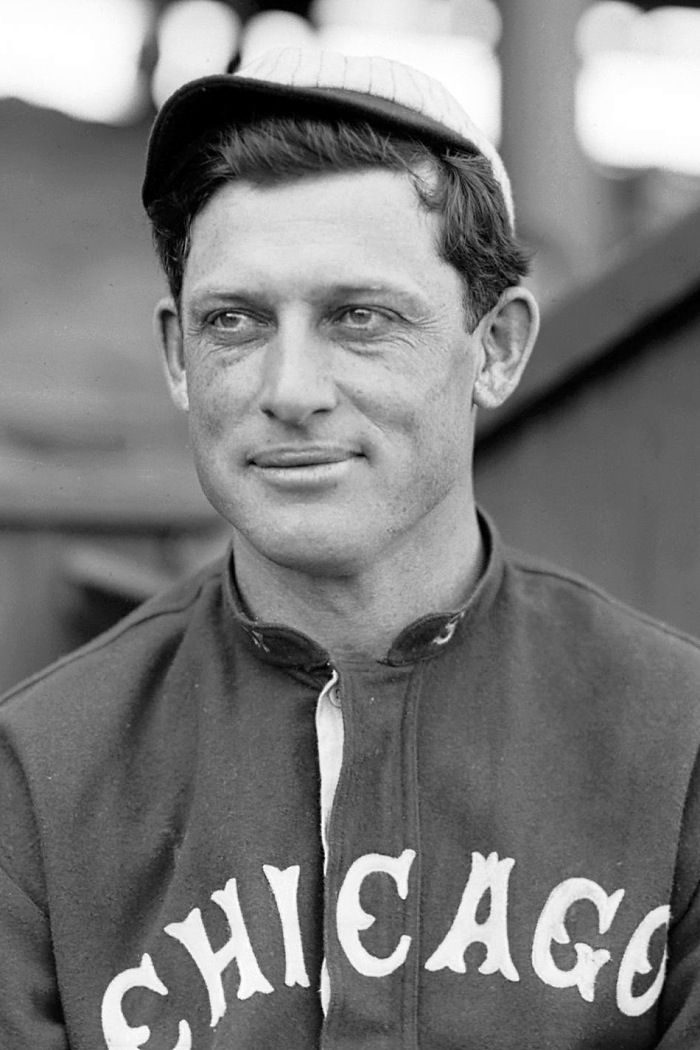
ED WALSH

Below is a survey of the White Sox' performance for each calendar decade. This chart 
shows that after a sustained run of success including four pennants and two world championships through 1919, the Sox entered a long period in which mediocrity or worse was the norm and respectability or better the exception.

Years                     W.         L.         Pct.        Championships

1901 - 1909          744       575       .564         A.L. 1901; World 1906

1910 - 1919          798       692       .536         World 1917; A.L. 1919

1920 - 1929          731       804       .476         none

1930 - 1939          678       841       .446         none

1940 - 1949          707       820       .463         none

1950 - 1959          847       693       .550         A.L. 1959

1960 - 1969          852       760       .529         none

1970 - 1979          752       853       .469         none

1980 - 1989          758       802       .486         Division 1983

1990 - 1999          816       735       .526         Division 1993, 1994

2000 - 2009          857       764       .529         Div. 2000; World 2005; Div. 2008

2010 - 2019          743       876       .459         none


LUKE APPLING

The first ten-year stretch in White Sox annals to produce a losing record was the period from 1918 through 1927. After that, no ten-year stretch produced a winning record until 1935 through 1944. 
    The Sox' worst ten-year run of all time was from 1926 through 1935. It certainly was no reflection on the performance of Hall of Famers Luke Appling and Ted Lyons 
 

Years                     W.         L.         Pct.        Notes

1926 - 1935          643       881       .422         One season over .500


NELLIE FOX

The White Sox' best ten-year run was from 1952 through 1961--a subset of the 17 consecutive winning seasons the South Siders posted from 1951 through 1967. This period featured the American League pennant of 1959 and the heyday of Luis Aparicio, Nellie Fox, Minnie Minoso, Billy Pierce, and Early Wynn, among others.
     The Sox were so consistent during these years that their cumulative winning percentage was .568 for the ten-year runs ending in 1960, 1961, and 1963--and .567 for the periods ending in 1962, 1964, and 1965. 
  

Years                     W.         L.         Pct.         

1952 - 1961          879       669       .5678        

1954 - 1963          888       676       .5677        

1951 - 1960          874       666       .5675        

1953 - 1962          883       673       .5674

1955 - 1964          892       680       .5674

1956 - 1965          896       684       .5670


FRANK THOMAS

After this, the Sox and their fans endured a dry spell from the late 1960s through the 1980s (briefly relieved by the memorable division championship of 1983). 
     The last decade of the twentieth century and the first decade of the twenty-first was a sort of golden age. Teams led by the likes of Mark Buehrle, Paul Konerko, Magglio Ordonez, Frank Thomas, and Robin Ventura captured five division titles, one American League pennant, and the first world championship for either Chicago team since 1917.  

Tuesday, July 6, 2021

Worth a Thousand Words: The 1985 Bears Defense

Ladies and gentlemen, presenting the greatest defense in pro football history. 
     Bears defensive coordinator Buddy Ryan named his defense "46" after the uniform number of his favorite player, safety Doug Plank, who played for the team from 1975 to 1982. 
     It all came together for Ryan's defense in 1985. After dominating throughout the regular season and posting shutouts in the two NFC playoff games, the Bears took it up another notch in the Super Bowl, playing with a ferocity that was truly frightening. "It was like trying to beat back the tide with a broom," said New England Patriots guard Ron Wooten after his team was routed 46-10. 
     "It will be many years," Paul Zimmerman wrote in Sports Illustrated, "before we see anything approaching the vision of hell that Chicago inflicted on the New England Patriots in Super Bowl XX. It was near perfect, an exquisite mesh of talent and system, defensive football carried to its highest degree."
     And now it has been many years, and we still haven't seen anything to compare with this group. It will be a cold day you know where before we ever do. 


Check out our book Heydays: Great Stories in Chicago Sports on Amazon.


Saturday, June 26, 2021

'Twas Forty Years Ago: Chicago Sports Memories of 1981


In 1981, the White Sox were in the first year of ownership by Jerry Reinsdorf and Eddie Einhorn, while the Cubs were in the last year of ownership by the Wrigley family. A work stoppage sliced two months out of the season, from mid-June to mid-August. Standings were kept separately for both "halves," with the unfortunate result that the Cincinnati Reds missed the postseason despite having the best overall record in either league.

CARLTON FISK

For the White Sox, newly acquired catcher Carlton Fisk made a big splash on Opening Day against the Boston Red Sox, the team he had just left acrimoniously. The White Sox were trailing 2-0 in the top of the eighth when Fisk cracked a three-run homer, stunning the Fenway Park crowd and leading to a 5-3 victory. The future Hall of Famer remained with the White Sox for the rest of his career, retiring in 1993.
     The Sox were 31-22 before the players' strike, but they slid to 23-30 after the strike to finish at 54-52. Twenty-two-year-old southpaw Britt Burns was a bright spot, going 10-6 with a sparkling 2.64 ERA. The 1981 season marked the end of broadcaster Harry Caray's 11-year run on the South Side. It also marked the end of the "softball-style" uniforms that were introduced by previous owner Bill Veeck in 1976.

BILL BUCKNER

The Cubs were an abysmal 15-37 before the strike, a less atrocious 23-28 afterwards, and finished at 38-65 overall. First baseman Bill Buckner had a solid season, hitting .311 and knocking in 75 runs (more than twice as many as any teammate). Starting pitcher Rick Reuschel was traded away in June, depriving the team of its heart and soul.
     After 60 years of ownership by three generations of Wrigleys, the franchise and ballpark were sold to Tribune Company for a reported $19.5 million. The new owners appointed Philadelphia Phillies skipper Dallas Green as general manager after the season. Broadcaster Jack Brickhouse, a fixture for 35 years, retired and was replaced by Caray. In Green and Caray, the Cubs had hired the two people who would do more than anyone else to ignite the coming explosion in the franchise's popularity and value.

REGGIE THEUS

By the latter part of the 1980-81 season, Bulls head coach Jerry Sloan had seen enough of Larry Kenon, a silky 6-foot-9 scorer who was not interested in playing defense. Kenon went onto the bench, and off came Dwight Jones, a blue-collar type who was Sloan's kind of guy. With Jones and David Greenwood at forward, Artis Gilmore at center, Reggie Theus and Ricky Sobers at guard, and swingman Bob Wilkerson as sixth man, the Bulls won 12 of their last 14 games to finish 45-37 and qualify for the playoffs. They swept the New York Knicks in a best-of-three opening round series before bowing in four straight games to Larry Bird and the Boston Celtics, who went on to capture the championship.

DENIS SAVARD

For the Blackhawks, head coach Keith Magnuson was just one year removed from the conclusion of his 11-year playing career. The rookie coach welcomed another rookie, 19-year-old center Denis Savard, who was destined to join him among the most beloved Hawks of all time. Having come to Chicago from his native Quebec hardly knowing a word of English, Savard was initially bashful off the ice. On the ice, he was a dazzling skater and electrifying playmaker who proved he belonged from day one. With 28 goals and 47 assists for 75 points, Savard was second to veteran center Tom Lysiak for the team scoring lead. Better yet, he compiled a superb plus/minus of +27. He was headed for the Hall of Fame.
     Another future Hall of Famer, Tony Esposito, led the league in minutes played by a goalie for the sixth time in the past seven seasons. He was between the pipes for all but two of the Hawks' wins, but (not coincidentally) missed ten of their losses. The Hawks went 31-33-16 for the regular season and made a quick exit from the playoffs, swept by Calgary in the first round.


GARY FENCIK

The Bears lost six of their first seven games and ten of the first 13. They won the last three games to finish at 6-10, but it was too little and too late to save head coach Neill Armstrong, who was fired after four years at the helm that featured a 30-34 record and one playoff appearance. The Bears ranked 27th out of the NFL's 28 teams on offense and 14th on defense.
     Running back Walter Payton had what was for him a sub-par season, gaining "only" 1,222 yards on 339 rushing attempts for a middling average of 3.6 yards per carry. He scored just eight touchdowns (six rushing and two receiving) and was left out of the Pro Bowl after five consecutive appearances. Fortunately, those who thought the 27-year-old Payton was on his last legs proved to be sorely mistaken. Safety Gary Fencik was the Bears' only Pro Bowler and a first-team All-Pro to boot.
     When Armstrong was let go, Bears owner George Halas made a surprising and controversial move by giving the job to Mike Ditka, a Dallas Cowboys assistant coach who had starred for the Bears at tight end during the 1960s. As Bears head coach, "Iron Mike" soon became an iconic figure.

KARL-HEINZ GRANITZA

The Chicago Sting won the North American Soccer League title, becoming Chicago's first championship team since the 1963 Bears. Coached by Willy Roy, the Sting went 23-9 on the season and defeated the New York Cosmos in the Soccer Bowl for the championship. The title game was scoreless for 90 minutes of regulation and 15 minutes of overtime before the Sting prevailed 2-1 in a shootout. Rudy Glenn booted the game winner for the Sting. Other prominent players included Karl-Heinz Granitza, Pato Margetic, Franz Mathieu, Ingo Peter, Arno Steffenhagen, and goalie Phil Parkes.
     Founded and run by the ebullient Lee Stern, the Sting played outdoor soccer from 1975 through 1984 (when they won a second championship) and indoors from 1982 through 1988.

STATUE OF JOHN HENRY AND THE BART AT ARLINGTON PARK

The inaugural Arlington Million, the first million-dollar horse race in history, was won by six-year-old gelding John Henry. Ridden by the legendary Bill Shoemaker, John Henry was well off the pace for most of the running, then launched a stirring stretch drive that saw him nip The Bart by a nose at the wire. John Henry was voted Horse of the Year for 1981, and he won the award again in 1984 after capturing the Million for a second time.


Check out our book Heydays: Great Stories in Chicago Sports on Amazon.
Friday, June 25, 2021

With a Little Help From His Friends

No-hitters often come out of nowhere, and that’s what makes them so much fun. Some of the greatest pitchers in history never threw a no-hitter and still ended up in Cooperstown, while their lesser contemporaries caught lightning in a bottle and then faded into well-deserved obscurity.

     
ZACH DAVIES

The unimposing Cubs righthander Zach Davies inscribed his name in the record books last night when he and relievers Ryan Tepera, Andrew Chafin, and Craig Kimbrel combined to hold the Los Angeles Dodgers hitless in a 4-0 victory by the North Siders. Davies walked five batters (while striking out four) in six innings of work, and his three successors walked one batter apiece to make it an alarming eight for the evening--but all's well that ends well. Kimbrel struck out the side in the ninth to conclude the no-no.
     
     In addition to catching the first no-hitter of his career, Willson Contreras belted a two-run homer with the Cubs leading only 1-0 in the sixth inning.

     Kimbrel has recovered nicely after enduring a very rough stretch during the Cubs’ late-season collapse in 2019. He has been truly stupendous this year, notching 20 saves in 22 opportunities with an ERA of 0.56, a WHIP of 0.66, and 52 strikeouts in 30 innings. His bullpen mates Tepera and Chafin have been similarly effective.

     Last night’s collaborative gem was the 17th no-hitter in the Cubs 146-year history and only the 12th since the beginning of the 20th century. Nineteenth-century star Larry Corcoran tossed three no-hitters (for the team then known as the White Stockings), while Ken Holtzman and Jake Arrieta each recorded two.
 
     Below is a list of no-hitters by Cubs pitchers over the years:
 

DatePitcherOpponentScore


August 19, 1880Larry CorcoranBoston Red Caps6–0


September 20, 1882Larry CorcoranWorcester Ruby Legs5–0


June 27, 1884Larry CorcoranProvidence Grays6–0


July 27, 1885John Clarksonat Providence Grays4–0


August 21, 1898Walter ThorntonBrooklyn Bridegrooms2–0


August 31, 1915Jimmy Lavenderat New York Giants2–0


May 12, 1955Sam JonesPittsburgh Pirates4–0


May 15, 1960Don CardwellSt. Louis Cardinals4–0


August 19, 1969Ken HoltzmanAtlanta Braves3–0


June 3, 1971Ken Holtzmanat Cincinnati Reds1–0


April 16, 1972Burt HootonPhiladelphia Phillies4–0


September 2, 1972Milt PappasSan Diego Padres8–0


September 14, 2008Carlos Zambranovs. Houston Astros*5–0


August 30, 2015Jake Arrietaat Los Angeles Dodgers2–0


April 21, 2016Jake Arrietaat Cincinnati Reds16–0


September 13, 2020Alec Millsat Milwaukee Brewers
12–0
 
June 24, 2021                   [Four pitchers]             at Los Angeles Dodgers        4-0

* Game was played in Milwaukee due to a hurricane in Houston.  
 
  
Check out our book Heydays: Great Stories in Chicago Sports on Amazon.