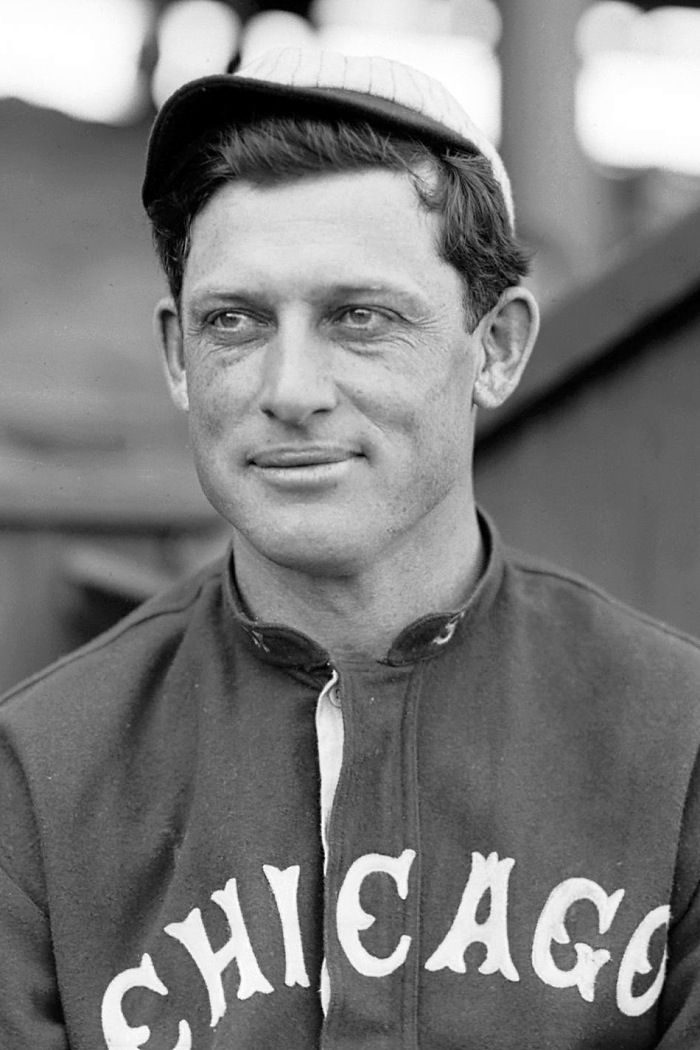
Wednesday, August 11, 2021

Tony Esposito, 1943 - 2021

Tony Esposito was one of the greatest of the greats in hockey history. A pioneer of the butterfly” style of goaltending, he played 873 regular-season games and 99 playoff games for the Blackhawks. He ranks as the franchise’s all-time leader in wins (418) and shutouts (74). It was his propensity for shutouts, of course, that earned him the unforgettable nickname Tony O.
Esposito won the Calder Trophy as NHL rookie of the year in 1969-70 and the Vezina Trophy as outstanding goalie three times. He was a five-time All-Star and was elected to the Hockey Hall of Fame in 1988, his first year of eligibility. Hockey-Reference.com ranks him as the greatest player (not just the greatest goalie) in the Blackhawks illustrious history.
The Hawks acquired Esposito from Montreal after the 1968-69 season in the greatest waiver deal in NHL history. The Canadiens stuck with the two goalies who had just carried them to the Stanley Cup championship, future Hall of Famers Gump Worsley and Rogie Vachon, while letting another future Hall of Famer get away.
 
The passage below is a look back at Tony Os sensational 1969-70 season.    
 
TONY ESPOSITO

 
When the Blackhawks visited Montreal’s Forum to play the Canadiens on October 25, 1969, they were winless in six games for the young season and seemed destined for a second straight last-place finish, while the Canadiens were heavy favorites to win their third consecutive Stanley Cup.
 The Hawks had gone one game over .500 in 1968-69, but had nonetheless finished sixth and last in the NHL’s powerful Eastern Division, missing the playoffs for the first time since 1958. They entered the next season with more questions than answers. First, Ken Wharram, the plucky winger who was one of the club’s veteran leaders, suffered a heart attack that left him in critical condition for a time (he recovered, but his playing career was over). Then superstar Bobby Hull walked out of training camp, charging that the Hawks had reneged on certain promises made during his contract negotiations the year before. The goalie position was unsettled, with coach Billy Reay torn between Denis DeJordy, who had disappointed since replacing the great Glenn Hall two years earlier, and Tony Esposito, whose entire NHL experience consisted of 13 games with Montreal the season before.   
     With seven rookies (including Esposito and future mainstays Keith Magnuson and Cliff Koroll) in the lineup, the Hawks were bombed 7-2 in the season opener at St. Louis. Then they lost four more games before managing a tie at New York. “It may take 30 or 35 games before we play the kind of hockey I believe we are capable of playing,” Reay said, “but I am not discouraged.”
 The game in Montreal was the first portent of better things to come. Esposito, who had looked so bad in the opening-night debacle, was brilliant as the Hawks won 5-0. It was the Canadiens’ first loss of the season and their first on home ice in 25 games dating back to the previous January. “I decided to go with Tony,” said Reay, “in the hopes that he’d be fired up against the team that let him go, and it worked. I can’t remember winning that decisively too often in Montreal.”
     
The Hawks were a different team after Esposito’s shutout of the Canadiens. They lost their next game, then reeled off a 10-game unbeaten streak of eight wins and two ties. Esposito played every minute of the streak and allowed a total of 10 goals. Two of the games were shutouts, one of them a 1-0 decision over Montreal at the Stadium.
     Beginning with the game in Montreal on October 25, the Hawks went 45-17-8 for the rest of the season. For the last 12 weeks, they were 30-7-4.  
     Although their record of 38-22-16 would have easily won the Western Division (home of the six three-year-old expansion teams), the Canadiens were out of the playoffs for the first time since 1948. For the first time ever, the postseason would not include either Montreal or Toronto. 
     “Tony’s the guy who made the difference,” center Pit Martin said after the Hawks thrashed the Canadiens 10-2 in the regular-season finale. “He has made stops nobody could believe in game after game. He is the guy we’ve rallied around. I don’t think there ever has been a goaltender with a season like the one he’s had.”   
     Esposito’s season for the ages carried the Hawks from last place to first and earned him the Vezina Trophy as outstanding goalie and the Calder as rookie of the year (he finished second to Boston’s Bobby Orr in the MVP balloting). He played 63 games, allowing just one goal in 15 of them and setting a record with 15 shutouts. 
     As quick to refuse credit as he was to accept blame, Esposito was matter-of-fact about his feats. “All the guys worked so hard for me,” he said. “They have all year. I kept thinking, ‘Don’t ease up; you don’t want to let them down.’”
 
 
Check out our book Heydays: Great Stories in Chicago Sports on Amazon. 


Thursday, July 29, 2021

Worth a Thousand Words: Kris Bryant and Anthony Rizzo

It was November 2, 2016, at Progressive Field in Cleveland. The Cubs led the Indians 8-6 in the tenth inning of Game 7 of the World Series. They were only one out away from that which their fans had dreamed of for so many decades. 
    
KRIS BRYANT (foreground) and ANTHONY RIZZO.

Then Cleveland's Brandon Guyer coaxed a walk from Cubs reliever Carl Edwards and promptly stole second. Rajai Davis, whose two-run homer off Aroldis Chapman had tied the ballgame in the eighth inning, rapped the next pitch over second base to score Guyer. 
     Cubs manager Joe Maddon called on lefty Mike Montgomery to face the next htter, Michael Martinez. Martinez took the first pitch for a called strike. He swung at the next offering and chopped it to the left of the mound. Cubs third baseman Kris Bryant charged in, made a nifty pickup on the run, and fired the ball across the infield as his feet slipped out from under him on the wet grass.
     Despite Bryant's slip, the throw was true. It landed in first baseman Anthony Rizzo's glove with Martinez still about two steps from the bag, and that was that. 
     "The Chicago Cubs are world champions," Rizzo said after the game. "Let that sink in."
 
Check out our book Heydays: Great Stories in Chicago Sports on Amazon. 

Thursday, July 15, 2021

Duncan Keith

Duncan Keith, who was traded to the Edmonton Oilers this week, is ranked by Hockey-Reference.com as the sixth greatest Blackhawk of all time, after Tony EspositoStan Mikita, Bobby Hull, Patrick Kane, and Glenn Hall. Keith is first among defensemen, ahead of Hall of Famers Doug Wilson and Pierre Pilote and his perennial backline partner Brent Seabrook.

DUNCAN KEITH

Keith played 16 years in a Blackhawk sweater and ranks second, after Mikita, in games played for the franchise (Seabrook is third).
     In addition to winning the Stanley Cup in 2010, 2013, and 2015, Keith won the Norris Trophy as the NHL's top defenseman in 2010 and 2014 and the Conn Smythe Trophy as most valuable player of the Stanley Cup playoffs in 2015. He was an Olympic gold medalist for Canada in 2010 and 2014, and he was named among the 100 greatest NHL players of all time in 2017. It seems certain that sweater number 2 will never be worn again by a Blackhawk—except when Keith himself wears it on the night it is retired.
     
Although Keith seemed to grow tired of hearing about it and talking about it over the years, an incident from Game 4 of the Western Conference Final in 2010 showed us all we needed to know about his toughness and heart. Keith dropped to one knee trying to block a shot—and succeeded, catching the puck square in the mouth.
     "They [his teammates] didn't say much when I came off," said Keith, "because they didn't want to scare me about the way it looked. No stitches. Just stuck a bunch of needles in there and froze it all up." Minus seven teeth, Keith returned to the ice just in time to assist on the game-tying goal with barely a minute remaining in the second period. The Hawks scored two unanswered goals in the third period to complete a sweep over the San Jose Sharks and qualify for their first Stanley Cup Final since 1992.  
     "It's just missing teeth," Keith said through his ravaged mouth after the game. "It's a long way from the heart."


Check out our book Heydays: Great Stories in Chicago Sports on Amazon. 


Monday, July 12, 2021

Windows in Time: The White Sox Decade-by-Decade

The White Sox won the pennant in 1901, the first year of their existence and of the American League's existence. We'll never know how they might have fared against the National League champion Pittsburgh Pirates--because the modern World Series was not played until 1903.
     The Sox won the pennant again in 1906. This time they went on to defeat the heavily-favored Cubs in the World Series, with future Hall of Famer Ed Walsh winning two games. 
     The period from 1901 through 1909 has produced the best cumulative regular-season winning percentage of any calendar decade in White Sox history to date.

ED WALSH

Below is a survey of the White Sox' performance for each calendar decade. This chart 
shows that after a sustained run of success including four pennants and two world championships through 1919, the Sox entered a long period in which mediocrity or worse was the norm and respectability or better the exception.

Years                     W.         L.         Pct.        Championships

1901 - 1909          744       575       .564         A.L. 1901; World 1906

1910 - 1919          798       692       .536         World 1917; A.L. 1919

1920 - 1929          731       804       .476         none

1930 - 1939          678       841       .446         none

1940 - 1949          707       820       .463         none

1950 - 1959          847       693       .550         A.L. 1959

1960 - 1969          852       760       .529         none

1970 - 1979          752       853       .469         none

1980 - 1989          758       802       .486         Division 1983

1990 - 1999          816       735       .526         Division 1993, 1994

2000 - 2009          857       764       .529         Div. 2000; World 2005; Div. 2008

2010 - 2019          743       876       .459         none


LUKE APPLING

The first ten-year stretch in White Sox annals to produce a losing record was the period from 1918 through 1927. After that, no ten-year stretch produced a winning record until 1935 through 1944. 
    The Sox' worst ten-year run of all time was from 1926 through 1935. It certainly was no reflection on the performance of Hall of Famers Luke Appling and Ted Lyons 
 

Years                     W.         L.         Pct.        Notes

1926 - 1935          643       881       .422         One season over .500


NELLIE FOX

The White Sox' best ten-year run was from 1952 through 1961--a subset of the 17 consecutive winning seasons the South Siders posted from 1951 through 1967. This period featured the American League pennant of 1959 and the heyday of Luis Aparicio, Nellie Fox, Minnie Minoso, Billy Pierce, and Early Wynn, among others.
     The Sox were so consistent during these years that their cumulative winning percentage was .568 for the ten-year runs ending in 1960, 1961, and 1963--and .567 for the periods ending in 1962, 1964, and 1965. 
  

Years                     W.         L.         Pct.         

1952 - 1961          879       669       .5678        

1954 - 1963          888       676       .5677        

1951 - 1960          874       666       .5675        

1953 - 1962          883       673       .5674

1955 - 1964          892       680       .5674

1956 - 1965          896       684       .5670


FRANK THOMAS

After this, the Sox and their fans endured a dry spell from the late 1960s through the 1980s (briefly relieved by the memorable division championship of 1983). 
     The last decade of the twentieth century and the first decade of the twenty-first was a sort of golden age. Teams led by the likes of Mark Buehrle, Paul Konerko, Magglio Ordonez, Frank Thomas, and Robin Ventura captured five division titles, one American League pennant, and the first world championship for either Chicago team since 1917.  

Tuesday, July 6, 2021

Worth a Thousand Words: The 1985 Bears Defense

Ladies and gentlemen, presenting the greatest defense in pro football history. 
     Bears defensive coordinator Buddy Ryan named his defense "46" after the uniform number of his favorite player, safety Doug Plank, who played for the team from 1975 to 1982. 
     It all came together for Ryan's defense in 1985. After dominating throughout the regular season and posting shutouts in the two NFC playoff games, the Bears took it up another notch in the Super Bowl, playing with a ferocity that was truly frightening. "It was like trying to beat back the tide with a broom," said New England Patriots guard Ron Wooten after his team was routed 46-10. 
     "It will be many years," Paul Zimmerman wrote in Sports Illustrated, "before we see anything approaching the vision of hell that Chicago inflicted on the New England Patriots in Super Bowl XX. It was near perfect, an exquisite mesh of talent and system, defensive football carried to its highest degree."
     And now it has been many years, and we still haven't seen anything to compare with this group. It will be a cold day you know where before we ever do. 


Check out our book Heydays: Great Stories in Chicago Sports on Amazon.